News|Videos|February 3, 2026

Polymer Identification via Raman Spectroscopy

Author(s)Will Wetzel

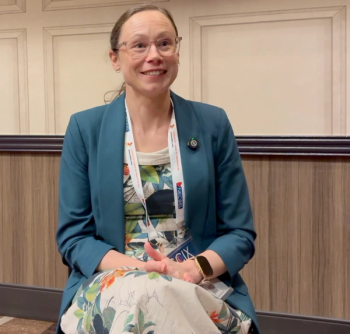
In Part III of our conversation with David Clases, we discuss how optical trapping better enables polymer identification via Raman spectroscopy, and where ICP-MS research is heading in the future.

At the 2026 Winter Conference on Plasma Spectrochemistry, which took place in Tucson, Arizona, from January 11–17, David Clases, an associate professor at the University of Graz in Vienna, Austria, sat down with Spectroscopy to discuss numerous topics related to his research (1).

In Part I of our conversation with Clasas, he discussed the trapping mechanism of the OF2i and how it improves downstream Raman and inductively coupled plasma–time of flight–mass spectrometry (ICP-TOFMS) measurements (2). As part of a broader discussion, Clases also highlighted his team’s work in microplastic analysis, explaining how his multimodal approach helped improve their analysis (2). Later, in Part II of our conversation with Clases, he walked us through his proof-of-concept analysis of microplastic and TiO₂ nanoparticles (3). Our conversation revealed just how this novel method led to new insights that emerged from simultaneously accessing size, molecular identity, and elemental composition at the single-particle level (3).

In Part III of our conversation with Clases, we discuss how optical trapping better enables polymer identification via Raman spectroscopy, and where ICP-MS research is heading in the future.

Spectroscopy: Another study of yours demonstrated that optical trapping not only enables polymer identification via Raman spectroscopy, but it also facilitates matrix exchange to reduce carbon background. How does this dual function improve particle detection limits, and what were the biggest challenges in designing this optical extraction mechanism?

David Clases: When you do single-particle ICP-MS alone, you have to always be aware of what kind of fraction you can look at. Sometimes, it's very difficult to look at the very large and the very small fractions.

Second, detecting small particles is restricted by different kinds of things. On the one hand, we have counting statistics, we have noise, and we have ionic background, which is making it difficult to pick up signals which might correlate to a single particle. This dissolved background can be removed if you use specific extraction techniques.

Our inspiration [for our project] actually came from solid-phase extraction (SPE). In SPE, you can use a specific solid phase to trap your analytes, and then you can wash them and remove the matrix. Then, you can elude them, and then they are in the pure form, and you can do much better analysis.

Instead of using a solid phase though, we used light. We can trap particles in the light beam, and while they are trapped, we can start studying them. So, we can learn something about shape size, and we can also learn something about their identity, for instance.

While we do this, we can just exchange the metrics around it. Instead of having a very high dissolved carbon background, we can remove this gradually and then replace it, for example, with ultra-pure water. Doing this really brings down the ionic background, improves the size detection limits, and with that, we are eventually able to detect much smaller microplastics, which would be lost if we don't do this type of approach.


This video clip is the third part of our conversation with Clases as part of our coverage of the Winter Conference on Plasma Spectrochemistry. To stay up to date on our coverage of the Winter Conference on Plasma Spectrochemistry, click here.

References

  1. IASA, Winter Conference on Plasma Spectrochemistry. IASA. Available at: https://iasa.world/winter-plasma-conference (accessed 2026-02-02).
  2. Wetzel, W. How Trimodal OF2i–Raman–ICP-TOFMS Is Changing Microplastic Analysis. Spectroscopy. Available at: https://www.spectroscopyonline.com/view/how-trimodal-of2i-raman-icp-tofms-is-changing-microplastic-analysis (accessed 2026-02-02).
  3. Wetzel, W. New Insights from Single-Particle Microplastic and TiO2 Analysis. Spectroscopy. Available at: https://www.spectroscopyonline.com/view/new-insights-from-single-particle-microplastic-and-tio2-analysis (accessed 2026-02-02).

Newsletter

Get essential updates on the latest spectroscopy technologies, regulatory standards, and best practices—subscribe today to Spectroscopy.