SPEC PerkinElmer 10.13
News|Videos|August 18, 2026

Previewing the ACS 2026 Fall Meeting

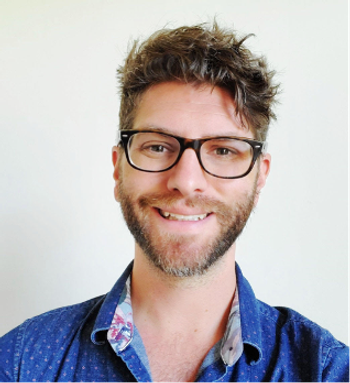
In this preview of the upcoming American Chemical Society (ACS) Fall 2026 Meeting, we sat down with Pavithraa “Pavi” Sundararajan, a postdoctoral fellow at NASA Ames Research Center, to ask her about what she is looking forward to at the conference.

The American Chemical Society (ACS) Fall 2026 Meeting is set to take place next week from August 23 to August 27th in Chicago, Illinois.1 McCormick Place Convention Center will serve as the central venue, with registration covering keynotes, technical sessions, Expo access, networking events, and Career Fair participation.1 As part of the conference program, there will be a 150th-anniversary morning symposium will feature Nobel Laureates spanning bioorthogonal chemistry, super-resolution microscopy, origins of genetic information, and lithium battery chemistry.1

Spectroscopy programming includes analytical “Advances in Spectroscopy” sessions and physical chemistry symposia on time-resolved optical/THz/X-ray modalities, multidimensional methods, and theory–experiment integration with machine learning.1 In addition, there will be talks dedicated to how spectroscopy is being used in astrochemistry.

One of those talks will be delivered by Pavithraa “Pavi” Sundararajan, who is a postdoctoral fellow at NASA’s Ames Research Center. Her talk titled, “Infrared Spectroscopy of Carbon Grains Formed from Nitrogen substituted Polycyclic Aromatic Hydrocarbons Precursors Under Astrophysical Conditions: Implications for Space Return Samples,” will explore how nitrogen-substituted polycyclic aromatic hydrocarbons (N-PAHs) may contribute to the aromatic infrared (IR) bands observed in space and describes efforts to synthesize carbon grains from N-PAH precursors under astrophysical conditions.2

In the below video segment, Sundararajan explains what she is looking forward to at the ACS Fall 2026 Meeting.

Spectroscopy: Apart from your talk, what are you looking forward to at the ACS 2026 Fall Meeting?

Pavi Sundararajan: The ACS meetings have been an excellent platform for meeting and interacting with chemists from other subdisciplines. These interactions always bring new insights into interpreting our results, and they spark new research ideas in multidisciplinary domains while fostering new collaborations through these interactions. I'm eagerly looking forward to the ACS 2026 Meeting, as I'm confident that it will significantly shape my understanding of my ongoing research on astrochemistry and planetary science.

Spectroscopy is continuing to provide ongoing coverage of the upcoming ACS Fall 2026 Meeting. To view all of our latest coverage, you can access our ACS Fall Meeting landing page: https://www.spectroscopyonline.com/conferences/acs-fall-meeting
References
  1. Wetzel, W. Why Spectroscopists Should Attend the ACS Fall 2026 Conference. Spectroscopy Online, 2026. https://www.spectroscopyonline.com/view/why-spectroscopists-should-attend-the-acs-fall-2026-conference (accessed August 12, 2026).
  2. Sundararajan, P. Infrared Spectroscopy of Carbon Grains Formed from Nitrogen substituted Polycyclic Aromatic Hydrocarbons Precursors Under Astrophysical Conditions: Implications for Space Return Samples. Presented at the American Chemical Society, Chicago, Illinois, August 26, 2026. Available at: https://acs.digitellinc.com/live/37/session/596644

Related to this article

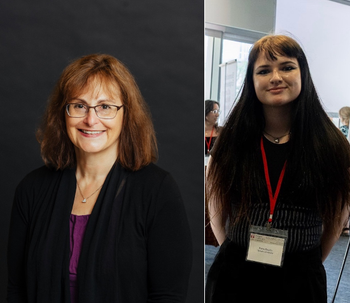
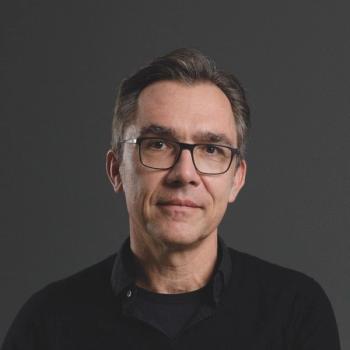
Nancy Pleshko (left) is a Laura H. Carnell Professor Emerita in Temple University's Department of Bioengineering. Petra A. Baylin (right) is a research assistant in the Tissue Imaging and Spectroscopy Lab at Temple University. Photo Credits: © Nancy Pleshko and Petra Baylin
As part of our coverage of the SciX 2026 Conference, Nancy Pleshko and Petra Baylin of Temple University sat down with Spectroscopy to talk about their recent study, explaining how Fourier transform infrared (FT-IR) imaging of ultra-high weight molecular polyethylene (UHMWPE) implants permits oxidation evaluation throughout the sample yielding insight into failure.
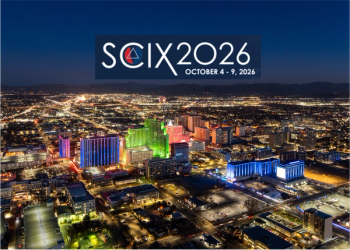
Sparks near Reno Nevada – Site of 2026 SciX Conference ©   DTM Media  -chronicles-stock.adobe.com
Wednesday's program at SciX 2026 kept returning to one question: can spectroscopy perform outside the controlled laboratory? Speakers took surface-enhanced Raman scattering (SERS), laser-induced breakdown spectroscopy (LIBS), mid-infrared photonics, chemometrics, and fluorescence excitation–emission matrix (EEM) spectroscopy into clinics, food plants, reactor coolant loops, brine fields, and drinking water supplies.
FACSS 2026 Award Interviews ©  Erin -chronicles-stock.adobe.com
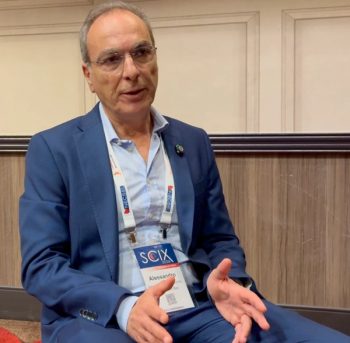
Eight FACSS award winners at SciX 2026, One LIBS trailblazer. Forty-eight questions. And not one of them is a softball. Award season in spectroscopy usually means polite applause, a plaque, and a photo. We're not completely interested only in the award sessions. The eight scientists honored at SciX 2026 in Sparks, Nevada, along with LIBS researcher Alessandro De Giacomo, are pushing Raman into operating rooms, flying LIBS on drones, reading chemistry off Mars, and tracing toxic metals downwind of industrial sites. Their work makes big claims. In the coming days, Spectroscopy will sit down with eight of these researchers and ask whether those claims hold up. The interviews that follow won't just celebrate. They'll press on the gaps between simulation and experiment, between the lab bench and the clinic, and between a clever paper and an instrument someone will actually buy and use.