The Raman Spectroscopy Community Heads to Istanbul for ICORS 2026
Key Takeaways
- Raman spectroscopy leverages inelastic light scattering to deliver molecular vibrational fingerprints, enabling applications from pharmaceuticals and materials science to forensics, art conservation, and cancer diagnostics.
- Scientific coverage includes SERS, TERS, coherent Raman imaging, biomedical/clinical use cases, nanomaterials characterization, and emerging portable platforms for in-field deployment.
The 29th International Conference on Raman Spectroscopy (ICORS) takes place next week in Istanbul, Turkey. We preview the conference here.
Next week, the 29th International Conference on Raman Spectroscopy (ICORS) will take place in Istanbul, Turkey, from August 23–27, 2026.1,2 ICORS, which is an ongoing conference that is held every other year, brings together researchers, industry professionals, and instrument developers that work with one of the most versatile tools in modern chemical and biomedical analysis, which is Raman spectroscopy.
What is Raman spectroscopy?
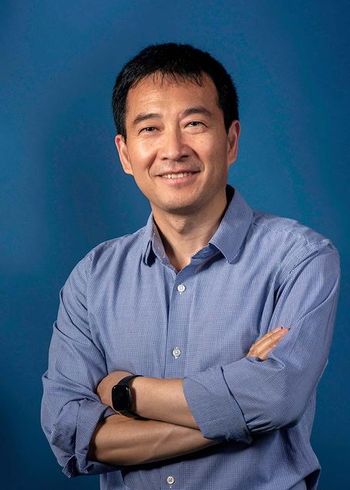
ICORS is a forum for scientists to discuss this evolution and growth. This year, ICORS is chaired by Prof. Dr. Mustafa Culha, who is a professor at the Department of Chemistry and Biochemistry of Augusta University.1 As part of the conference program, ICORS will feature plenary talks, keynote lectures, focused technical sessions, hands-on workshops, and an extensive poster program covering the full breadth of the field:
What are some of the upcoming award presentations at ICORS 2026?
Back in 2014, ICORS established three Raman awards (The Raman Lifetime Award, The Raman Award for the Best Junior Researcher, and The Raman Award for the most Innovative Technological Development). The Raman Lifetime Award honors a spectroscopist's career-spanning contributions to the field; the Raman Award for the Best Junior Researcher celebrates standout recent work by an early-career scientist; and the Raman Award for the Most Innovative Technological Development recognizes breakthroughs in new instrumentation and methodology.2 Past recipients include prominent names such as Prof. Laurence A. Nafie of Syracuse University, Prof. Sanford Asher of the University of Pittsburgh, and Prof. Volker Deckert of the Leibniz Institute of Photonic Technology.2 Winners are required to attend in person to receive their recognition, reinforcing ICORS's role as the field's central meeting point rather than simply a paper-publishing venue.
What other additional awards will be presented at ICORS 2026?
In addition to the Raman Awards, ICORS 2026 will also spotlight early-career researchers through the Coblentz Society Early Career Poster Award and the Journal of Raman Spectroscopy Early Career Poster Award.2 These awards are both aimed at encouraging the next generation of spectroscopists. Selected conference presentations will be invited for submission to a special issue of the Journal of Raman Spectroscopy, subject to peer review, while Applied Spectroscopy Practica offers attendees an additional open-access publication route for their work.
Why is ICORS taking place in Istanbul this year?
The conference venue is important because it could ultimately dictate how many attendees travel to the conference. Because the goal of ICORS is to connect the Raman spectroscopy community whose applications span continents and disciplines, venues are chosen because of their ability to bridge both sides of the world.1,2 This reason is why Istanbul is the quintessential location for a conference like ICORS. Istanbul is a city that resides in two continents (Europe and Asia), and its location is central to scientists from around the world.
References
- ICORS, 29th International Conference on Raman Spectroscopy. ICORS, 2026.
https://icors2026.org/ (accessed August 17, 2026). - ICORS, The Raman Awards. ICORS, 2026.
https://icors2026.org/the-raman-awards/ (accessed August 17, 2026). - Horiba, What is Raman Spectroscopy? Horiba, 2026.
https://www.horiba.com/usa/scientific/technologies/raman-imaging-and-spectroscopy/raman-spectroscopy/ (accessed August 17, 2026).