Register Now: Advances in Spectroscopy for Pharma and Biopharmaceutical Analysis Symposium
News|Videos|October 7, 2025

Previewing the Theophilus Redwood Award Session on Wednesday

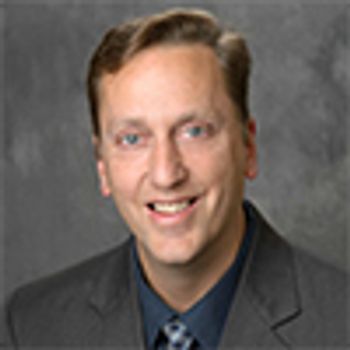
In this interview segment, Steven Bell, a professor of physical chemistry at Queen's University Belfast, provides an overview of his talk, and he also outlines what attendees can look forward to at this technical session, highlighting the list of speakers and their research interests.

On Wednesday from 9:00–9:30 am EST, Steven Bell, who is a professor of physical chemistry at Queen’s University Belfast, in Northern Ireland, United Kingdom, will be speaking at an award plenary to recognize his achievement for winning the Theophilus Redwood Award this year (1,2).

Bell’s talk, which is titled, “Theophilus Redwood Award: The Importance of the Surface in Surface-enhanced Raman Spectroscopy,” will track the evolution of Raman spectroscopy from a niche, technically demanding research tool to a widely accessible analytical technique suitable for routine use (1). In contrast, surface-enhanced Raman scattering (SERS), despite its promise of combining molecular specificity with exceptional sensitivity, has not yet achieved comparable adoption beyond specialist laboratories (1).

Bell will explain in his talk why SERS is falling behind when it comes to adoption in laboratories and why, surprisingly, it is not because of technological constraints. The talk explores current efforts to better understand and control the surface chemistry governing these interactions, with the goal of making SERS a more robust, reproducible, and user-friendly method for broader analytical applications, including potential field and clinical use.


In this interview segment, Bell provides an overview of his talk, and he also outlines what attendees can look forward to at this technical session, highlighting the list of speakers and their research interests. Our conversation highlights why this technical session is not one to miss!

This interview clip is part of our interview with Bell. To stay up to date with the latest coverage of the 2025 SciX Conference, click here.

At Queen’s University Belfast, Bell’s laboratory group focuses on spectroscopy, especially Raman spectroscopy, and the development of nano- and microstructured materials, with both areas intersecting in the creation of new SERS substrates (2). For over two decades, they have used advanced Raman spectroscopy as a quantitative analytical tool for studying molecular structure and composition (2).

References

  1. SciX Conference, Theophilus Redwood Award: The Importance of the Surface in Surface-enhanced Raman Spectroscopy. SciX Conference. Available at: https://scixconference.org/2025-final-program (accessed 2025-10-06)
  2. Queen’s University Belfast, Professor Steven E.J. Bell. QUB.AC.UK. Available at: https://www.qub.ac.uk/schools/SchoolofChemistryandChemicalEngineering/Study/PostgraduateResearch/find-a-phd-supervisor/professor-steven-bell.html (accessed 2025-10-06)

Related to this article

Abstract concept of connecting molecules DNA network vector neurons | Image Credit: © bill2499 - stock.adobe.com
Garth Simpson of Purdue University outlines plans to survey more ordered molecular assemblies and to apply interface-specific chiral spectroscopy to enzyme reactors, solid-phase synthesis, spin-selective reactions, and, ultimately, a new analytical method.
Healthcare administrator reviewing an insurance policy schedule with a stethoscope on a clipboard, health insurance coverage, medical underwriting, prior authorization, and patient claims processing. | Image Credit: Joi_studio - stock.adobe.com
In a SciX interview, Marc Porter covered a lot of ground, from a student-driven pivot into immunoassays to a baseball analogy for Stokes and anti-Stokes scattering, and shares the open questions he is still chasing.