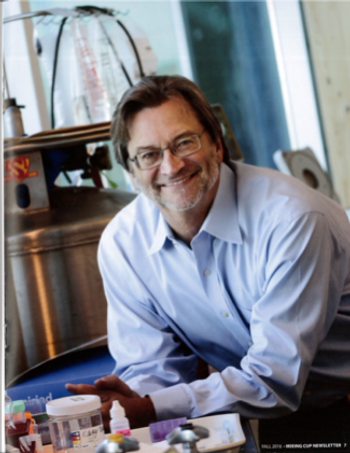
At SciX, Jay Kitt describes the experiment he ran on his own that launched his cytochrome c research, and explains why putting a number on peptide–lipid interactions matters.
In this interview segment, Shi recaps her talk that she delivered at the SciX Conference and the four major technologies that she and her team developed over the past few years at the University of California, San Diego.
Dr. Lingyan Shi is an associate professor in the Department of Bioengineering at the University of California, San Diego (UCSD). She is known for her work in biomedical imaging, where she uses vibrational spectroscopy and stimulated Raman scattering (SRS) microscopy to study cellular and tissue metabolism (1). By integrating SRS with multiphoton fluorescence (MPF), fluorescence lifetime imaging (FLIM), and second harmonic generation (SHG), Shi has developed multimodal imaging systems capable of revealing metabolic activity with high chemical specificity (1,2). Her innovations include identifying the “Golden Window” for deep-tissue imaging and creating deuterium-based metabolic labeling (DO-SRS) to trace newly synthesized biomolecules (1,2).
Shi has also enhanced computational imaging through Adam optimization-based pointillism deconvolution (A-PoD) and penalized reference matching SRS (PRM-SRS), improving spatial resolution and multiplexing capabilities (2). Her interdisciplinary research spans neuroscience, metabolism, and diagnostics, with major findings on lipid dysregulation in Alzheimer’s disease, kidney pathology, and aging. During her plenary talk, Shi discussed a multimodal metabolic nanoscopy platform combining DO-SRS, SRS, MPF, FLIM, and SHG for label-free, subcellular visualization of metabolism (2). Using deuterated probes to detect carbon–deuterium bonds, this platform revealed metabolic heterogeneity and demonstrated how tau overexpression disrupts lipid metabolism in Alzheimer’s brains, all effects that are reversible through AMPK activation (2). Shi’s work offers powerful new tools for uncovering disease mechanisms, identifying biomarkers, and advancing therapeutic research.
To recap the SciX Conference, Spectroscopy sat down with Shi, who was this year’s winner of the Emerging Leader in Molecular Spectroscopy Award, to talk about her research. In the first part of a three-part interview, Shi recaps her talk that she delivered at the SciX Conference and the four major technologies that she and her team developed over the past few years at UCSD.
This interview clip is the first part of our interview with Shi. To stay up to date with the latest coverage of the 2025 SciX Conference, click