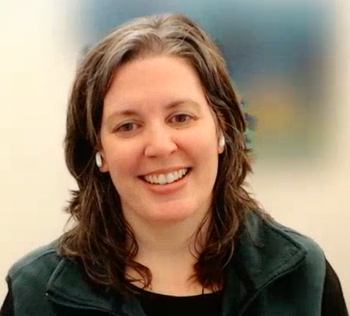
In this interview clip, Kristin L. Wustholz of William & Mary explains how her group judges the fidelity of its blinking-based classifications, why real artworks will call for classification libraries, and where the method fits alongside SERS.
Thursday, March 10, 2022 at 2pm EST | 11am PST | 7pm GMT | 8pm CET This presentation will cover two recently developed applications in two critical semiconductor processes: ultrafiltration and chemical mechanical planarization (CMP). Single-particle ICP-MS has demonstrated its ability to measure, for the first time, some important attributes of these processes.
Register Free:
Event Overview:
Single-particle ICP-MS (spICP-MS) has the capability to size and count particles as small as sub-10 nm at ultratrace levels. It has been widely accepted as a powerful tool in many fields of study, for example single-cell analysis by mass cytometry or CyTOF, environmental analysis, and industrial nanotoxicology. Its superb sensitivity and selectivity often distinguish it from other particle analysis techniques for many applications.
This presentation will cover two recently developed applications in two critical semiconductor processes: ultrafiltration and chemical mechanical planarization (CMP). Single-particle ICP-MS demonstrated its ability to advance the metrology to measure, for the first time, some important attributes of these processes. For example, spICP-MS was used to successfully measure size-exclusion retention of nanoparticles by ultrafiltration membranes, and to quantify the size changes of ceria nanoparticles before and after CMP processes. The fundamentals and applications of spICP-MS will be discussed in more detail in the presentation.
Key Learning Objectives:
Who Should Attend:
For any questions please contact Jordan Ramesh: jramesh@mjhlifesciences.com
Speakers
Charlie Chan
Advanced Research Specialist
3M
Charlie Chan obtained his Ph.D. in 2011 from the University of Cincinnati where he studied metalloproteins and their regulations under stress in plant and animal models. He is an author of 24 peer-reviewed journal publications. Charlie is an advanced research specialist at 3M. He is the corporate leader for elemental analysis technology. His current research interests include developing new analytical methods to solve problems in new technology and product development in the fields of semiconductor and biopharma processes. Charlie is a part-time student studying data science at Georgia Institute of Technology.
Register Free: