The annual Pittcon Conference and Exposition 2026 is heading to San Antonio, TX, March 9-11, 2026 and year’s conference builds on the 2025 conference’s focus on eco-friendly practices in analytical sciences.This will be the premier event in the field of analytical research, scientific instrumentation, and applied spectroscopy for 2026.
One of the opening morning’s conference sessions, ”Spectroscopy and Sustainability: A Perfect Match,” brings into focus how a wide range of spectroscopic instrumentations are applied to meet analytical needs while having a positive impact on sustainability.Advances in spectroscopy are driving its acceptance in an ever-widening range of applications.This session will highlight applications ranging from biomedical to pharmaceutical development to hyperspectral imaging on unmanned aerial vehicle (UAV) for crop monitoring to monitoring and control of simple to complex synthesis of toxic and hazardous material to identifying chemical, biological, radiological, nuclear, and explosive (CBRNE) materials to extraterrestrial studies.
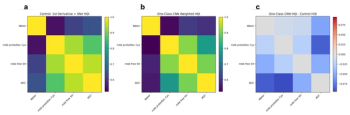
The speakers include Lyufei Chen of Horiba, who brings to the table simultaneous absorbance, transmittance, and fluorescence excitation-emission-matrix (A-TEEM) spectroscopy, which streamlines complex analytical workflows with rapid, small-volume measurements and data-rich molecular fingerprints. Its sustainable, low-impact design makes it ideal for protein characterization, formulation monitoring, and broader chemical analysis.In addition, Rohith Reddy (University of Houston) will cover photothermal mid-infrared spectroscopic imaging ‘s (MIRSI) ability to provide spatial resolution of microscopy to label-free, quantitative tissue characterization. When combined with machine learning, it reveals subtle biochemical and structural signatures that traditional methods often miss, enabling improved diagnosis of conditions such as lupus nephritis, ovarian cancer, osteosclerosis, and bone marrow fibrosis.
Carson Roberts of Headwall Photonics will take us to the world of hyperspectral and light detection and ranging (LiDAR) data from unmanned aerial vehicle (UAV) surveys of crops and the challenges in intensity striping, based on bidirectional reflectance distribution function (BRDF) in the hyperspectral data and cover extraneous points in the LiDAR.Luisa Profeta (Rigaku Analytical Devices), will describe portable sustainable spectroscopy equipment for chemical, biological, radiological, nuclear, and explosives (CBRNE) applications, even though the equipment was not intentionally designed with “sustainability” in mind. The presentation will talk about portable spectroscopy development, and how CBRNE applications can educate future users about how portable spectroscopy can provide opportunities for sustainability growth.Hannah Schorr (Metrohm) will cover modular, automated system for both preparing and analyzing solvent standards at the lab scale, featuring automated moisture analysis and rapid near-infrared (NIR) model development. This approach reduces manual labor, enables unattended operation, and eliminates toxic reagents, supporting safer and more efficient analysis and production.
Michael George (University of Nottingham) will provide a wide range of non-invasive spectroscopy-based techniques applied to flow, photo, and electrochemistry with his unique way of coupling complex synthetic schemes in a sustainable approach while enhancing process knowledge and safety.
John Wasylyk will give an overview of non-terrestrial and terrestrial applications and where they aligned with the twelve principals of green chemistry.This overview will set the stage for an invigorating and impactful session at Pittcon 2026 that combines spectroscopy with making analytical chemistry green.This session is one not to be missed and will invigorate the field of spectroscopy and its ever-broadening array of applications.
For more information on this session, visit https://app.swapcard.com/event/pittcon-2026/planning/UGxhbm5pbmdfNDI4ODU2MA==