Spectroscopy and the Environment: Analyzing Air, Water, Land, and Life
In this digital e-book “Spectroscopy and the Environment: Analyzing Air, Water,
Land, and Life,” we examine the critical role of light-based analysis in monitoring the
planet's health. Focusing on the four main categories in earth science—atmosphere,
hydrosphere, lithosphere, and biosphere—we explore how advanced spectroscopic
techniques can serve as a vital toolkit for environmental protection. Key topics include
the detection of methane and particulate matter in the air, the discovery of
microplastics in remote water sources, and the use of satellite imaging for land
management.
In this clip from our SciX interview with Siddhartha Das, he describes his team’s “eureka moment”: the discovery that the ion distribution inside a polymer layer shapes how water moves under an electric field. He also explains why experimental confirmation is still years away.
SciX 2026, the annual conference presented by the Federation of Analytical Chemistry and Spectroscopy Societies (FACSS), ran October 4–9, 2026, at the Nugget Casino Resort in Sparks, Nevada. The program spanned atomic and molecular spectroscopy, mass spectrometry, chemometrics, and bioanalysis. This report follows the meeting day by day, from Monday's clinical Raman plenaries to Friday's closing talks, drawing on the online program and Spectroscopy coverage of award winners, highlighting efforts to move Raman, SERS, LIBS, and single-particle ICP-MS toward clinical, environmental, and field use.
According to Thermo Fisher Scientific, their ARL X’TRA Pro diffractometer is designed for around-the-clock quantitative phase analysis of 50 to more than 100 samples per day.
At SciX, Alessandro De Giacomo explains how a 35-member international jury chose three papers: one on correct ICCD use and two applications using LIBS and LA-ICP-MS. He also explains what the selections say about the field.
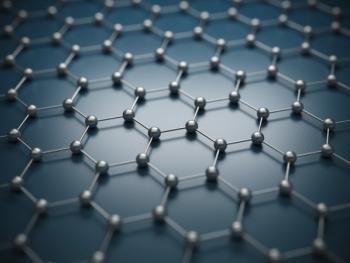
At SciX 2026, Siddhartha Das explains how graphene can be used to show how atom-level interactions between ions and water decide what passes through a membrane and what stays behind.
Four finalists for the FACSS Innovation Award presented on the afternoon of October 8, 2026, at SciX 2026. Their work spanned drone-mounted laser-induced breakdown spectroscopy (LIBS), a touch-and-sound virtual reality system for blind scientists, polarized infrared (IR) imaging of shape memory polymers, and an ultrasound-activated plasmonic nanoplatform aimed at Parkinson’s disease.
At SciX 2026, Marc Porter explained why surface-enhanced Raman scattering can outperform fluorescence assays. He also described how a protein-denaturing step rescued his team’s tuberculosis test from a major loss in sensitivity.
At SciX 2026, Alessandro De Giacomo explains why laser–matter interaction deserves more attention and how nanoparticle size forces a trade-off between sensitivity and practical tagging.