What are the Giza Pyramids and why are they important to study?
The Pyramids of Giza were built over 4,500 years ago on the west bank of the Nile near modern-day Cairo. They are the last of the Seven Wonders of the Ancient World still standing.
The Great Pyramid was built for Pharaoh Khufu, who reigned in the Fourth Dynasty. The base of the pyramid was approximately 755 feet, and the original height was 481 feet. The middle pyramid was built for Khufu's son Khafre, whose complex also features the Great Sphinx, which is a limestone guardian statue with a man's head and a lion's body, measuring 240 feet long and 66 feet high. The southernmost and smaller pyramid was built for Khafre's son Menkaure.
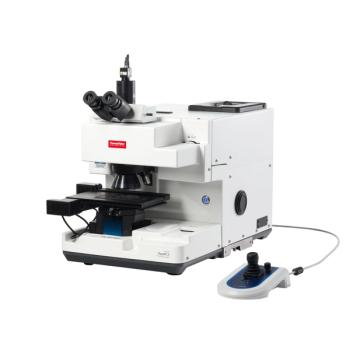
Each of the techniques discussed in this episode is used to help us learn something different about the Giza Pyramids. However, it is not the entire story about how spectroscopy is being used to help us learn more about Ancient Egypt. For example, portable spectroscopic instrumentation is being used to study ancient papyrus scripts because these methods are nondestructive.1 At the Saqqara necropolis, pXRF and XRD identified pottery minerals and firing temperatures.2 LIBS has shed light on mummification materials, while FT-IR analysis of gemstones helps reconstruct ancient trade routes.2,3 Challenges remain, including instrument costs limiting access in lower-income countries.
“Spectroscopy Around the Globe” is a monthly series that spotlights how spectroscopy is playing a role in helping us learn more about some of the world’s most famous landmarks. To learn more about this ongoing series, click here.
References
(1) Wetzel, W. How Spectroscopy is Uncovering Ancient Egyptian History. Spectroscopy. Available at: https://www.spectroscopyonline.com/view/how-spectroscopy-is-uncovering-ancient-egyptian-history (accessed June 19th, 2026).
(2) Wetzel, W. Using LIBS for Archaeological Analysis at Saqqara. Spectroscopy. Available at: https://www.spectroscopyonline.com/view/using-libs-for-archaeological-analysis-at-saqqara (accessed June 19th, 2026).
(3) Spectroscopy Staff. PXRF Analysis Reveals Unique Deterioration in Ancient Pottery. Spectroscopy. Available at: https://www.spectroscopyonline.com/view/pxrf-analysis-reveals-unique-deterioration-in-ancient-pottery (accessed June 19th, 2026).