In a SciX interview, Marc Porter covered a lot of ground, from a student-driven pivot into immunoassays to a baseball analogy for Stokes and anti-Stokes scattering, and shares the open questions he is still chasing.
Laser-induced breakdown spectroscopy (LIBS) is being used in numerous application areas, including environmental monitoring, cultural heritage, and space exploration.
At SciX, Kevin Wilkinson of the Universite de Montreal explains how faster data acquisition and new software have cut analysis time and how a particle’s chemical composition can link arsenic-bearing emissions back to a copper refinery’s processes.
Microspectroscopy, the marriage of spectroscopic chemical identification with microscopic spatial resolution, has advanced from Perkin-Elmer's first commercial infrared microspectrometer in 1953 to today's nanoscale AFM-IR probes, synchrotron-brightness infrared beamlines, and compact hyperspectral tissue imaging devices being developed for AI-assisted cancer detection.
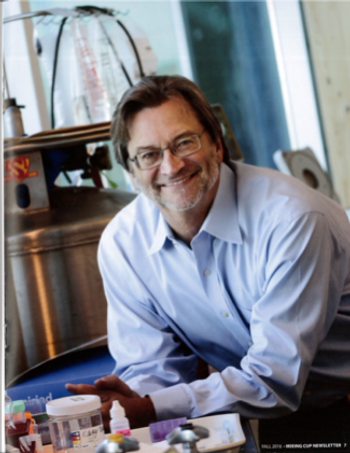
Marc Porter describes how his group’s surface science work led to SERS-based immunoassays, why reproducibility and pre-analytics decide whether a test reaches the clinic, and the questions he still wants to answer.
The 2026 first edition of Spectroscopy's Chemometrics, Data Processing, Machine Learning, and Artificial Intelligence Terminology Guide defines the classical chemometric, statistical, machine learning, AI, and process analytical technology (PAT) terms most likely to be encountered by working spectroscopists, analytical chemists, and process engineers.
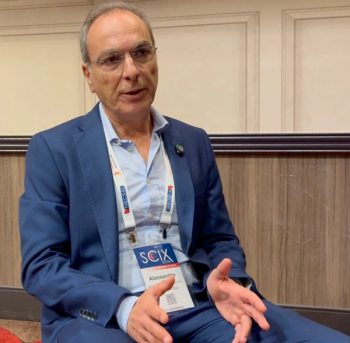
In an interview at SciX, Alessandro De Giacomo discusses nanoparticles as signal enhancers and medical tags, a self-calibrating drone LIBS system, open questions in laser–matter interaction, and why students need a strong foundation in fundamentals.