Unlock the future of analytical science and laboratory compliance. Our annual IR Technology and Resource Issue of Spectroscopy delivers essential, real-world solutions to maximize your lab's efficiency, data integrity, and regulatory readiness. Learn how to slash your user acceptance testing (UAT) times by leveraging supplier software validation, master peak positions for tri-, tetra-, and penta-substituted benzene rings with the magazine's acclaimed spectral interpretation workshop. Explore articles on AI-driven chemometrics, non-destructive submicron microplastics imaging, and multimodal forensic fiber differentiation. Whether you are navigating regulatory guidelines, selecting new instrumentation, or conducting advanced materials research, this issue provides the trustworthy insights you need to succeed.
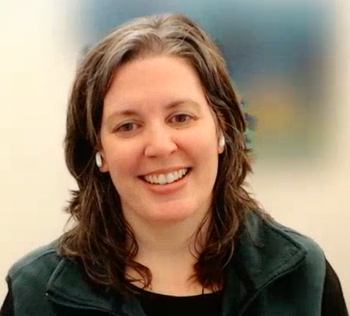
In this interview clip, Kristin L. Wustholz of William & Mary explains how her group judges the fidelity of its blinking-based classifications, why real artworks will call for classification libraries, and where the method fits alongside SERS.
Croatian researchers outline how optical emission spectroscopy (OES) can track reactive species and plasma parameters in real time, giving processors a path to move cold plasma treatments from the laboratory to production lines.
The following articles are the most accessed digital object identifier (DOI) manuscripts for Spectroscopy and LCGC International during the month of October 2026. Nine articles are individually ranked here by DOI page views; the seventh-highest entry (99 views) was recorded against the bare LCGC North America journal-level DOI rather than an individual article and is therefore not attributable to a single manuscript.
Garth Simpson of Purdue University explains how patterned photobleaching and spatial Fourier transforms can turn a single-point measurement into a diffusion coefficient at every pixel in the field of view.
In the below Eastern Analytical Symposium (EAS) interview, Kristin Wustholz of the College of William & Mary explains how machine learning applied to fluorescence blinking can identify dyes from cultural heritage objects without relying on SERS or spectral data.
In 2026, spectroscopy stopped behaving like a bench measurement and started acting like an intelligent, portable, and increasingly personal information system. Here is what Spectroscopy readers could not stop reading this year, and why 2027 may be the year these ideas leave the laboratory for good.
The updated and expanded 2026 edition of Spectroscopy's Instrument Components Terminology Guide defines the sources, detectors, optical and dispersive elements, sampling hardware, physical constants, and unit conversions used across UV-vis, NIR, IR, Raman, X-ray, and atomic spectroscopic instrumentation, with new terms reflecting component developments reported between 2022 and 2026.
In this "Pathways in Spectroscopy" clip, Kevin Wilkinson explains why adaptability, critical evaluation of instruments, and data analysis skills matter more for graduate students than mastering any single technique.