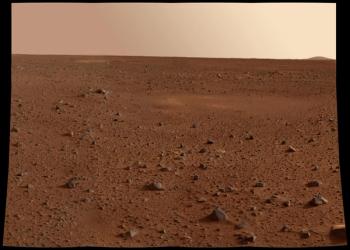
The Canadian Space Agency contract funds refinement and prototype testing of a laser-based cavity spectrometer intended to monitor trace methane continuously at the Martian surface.
Grant J. Myres and Nicolás Morato will receive the Tomas Hirschfeld Scholar Award at SciX 2021, taking place September 26–October 1, in Providence, Rhode Island. The winners of the award best exemplify the extraordinary creativity of the award’s namesake, whose deep understanding of the chemistry and physics of measurement science allowed him to find new connections and applications that eluded most practitioners. The recipients and their work are seen as potentially defining the future practice of analytical chemistry.
Myres is a fifth-year graduate student at the University of Utah (Salt Lake City, Utah). He earned his B.S. in chemistry from Luther College (Decorah, Iowa) in 2017. Under the direction of Olga Michels, Myres did undergraduate research, studying the effects of chemical modifications to photosensitizer scaffolds, and the impact of these modifications on the association affinity with human serum albumin, using fluorescence spectroscopy. He pursued a PhD in analytical chemistry, working in the laboratory of Joel M. Harris at the University of Utah where he focused on the development and applications of Raman spectroscopy to investigate and quantify biomolecular recognition interactions at solid–liquid interfaces.
Myres’s thesis research led him to develop a quantitative, label-free, and structurally informative heterogeneous assay using confocal-Raman microscopy to probe reactions of DNA immobilized on the interior surfaces of individual porous silica particles. His future research involves investigating the association of small-molecule therapeutics with immobilized duplex-DNA and characterizing both association affinities and primary sequence-specificity while simultaneously gaining insight into how the association reactions modulate both small-molecule and DNA structural conformations.
Myres is the author of two papers and has presented his work at seven national conferences and two invited seminars. He has won several awards for research and teaching: The University of Utah Teaching Assistant of the Semester Award (2019), the Society of Applied Spectroscopy Student Poster Award (2019, 2020), and a FACSS Student Poster Award (2019).
Nicolás Morato is a PhD candidate in analytical chemistry at Purdue University under the mentorship of R. Graham Cooks. He earned two degrees from the Universidad de los Andes, one in chemistry, and one in industrial engineering, with cum laude and summa cum laude distinctions, respectively.
As an undergraduate, Morato worked under Chiara Carazzone, investigating intraspecies variation in the venom and alkaloid extracts of several Colombian specimens, and with Ivan Mura on the stochastic modelling of biochemical processes. Prior to the start of his graduate career, Morato was a summer undergraduate fellow at Purdue, working with Jonathan Wilker on the characterization of oyster adhesive, and with an instructor in the Department of Chemistry at Universidad de los Andes.
Morato’s past research has focused on the development of ambient ionization methods for the rapid and simple analysis of complex samples, avoiding the sample preparation and separation steps that are commonplace in chemical analysis. Initially, he worked on forensic applications such as in situ drug testing. His current research is frequently related to high-throughput analysis using desorption electrospray ionization.
Some of Morato’s work has involved the development of label-free quantitative enzymatic assays, rapid profiling of microorganisms, and screening of organic reactions to study catalysis and microdroplet phenomena. Morato has authored more than 10 peer-reviewed publications and has been awarded the Charles H. Viol Memorial Fellowship, the Eastman Summer Fellowship in Analytical Chemistry, and the ACS Division of Analytical Chemistry Graduate Fellowship.