

Feature|Videos|July 9, 2025
The Evolving Role of Contract Manufacturing in Semiconductor Manufacturing
Experts explore the evolving role of CDMOs in semiconductor fabrication and why strategic partnerships are increasingly critical for process innovation and cost control.
Advertisement
Episodes in this series





As process complexity increases, fabs rely more on external labs to focus internal resources on core manufacturing. The discussion outlines how CDMOs evolve from backup suppliers into strategic partners, providing not just data, but actionable insights and materials expertise.
Key discussion topics include:
- The economic and operational benefits of outsourcing metrology.
- How strategic CDMO partnerships accelerate innovation.
- Best practices for integrating external analytical support.
Advertisement
Related to this article
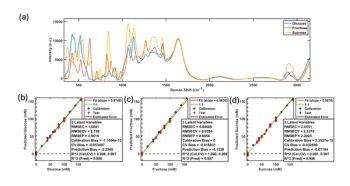
This column shows that a Raman plate reader paired with partial least squares regression can simultaneously quantify glucose, fructose, sucrose, and ethanol in yeast fermentation samples, using turbidity-matched calibration standards to correct for yeast-induced turbidity, and offers a rapid, label-free, high-throughput method for tracking sugar consumption and ethanol production in strain screening, media optimization, and process development.
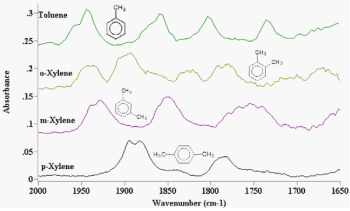
This column, the second installment on highly substituted benzene rings, shows that tri- and tetra-substituted substitution patterns can be distinguished by whether the ring bending peak is present and by the position of the in-phase aryl C-H wagging peak, which shifts according to how many adjacent hydrogens the ring carries.

How do ions and water interact at the atomic level in nanochannels grafted with polymer brushes using all-atom molecular dynamics simulations? Siddhartha Das of the University of Maryland and his team are working on answering this question.

Mammograms can find breast microcalcifications but can’t tell whether they are likely benign or malignant.

In a SciX interview, Marc Porter covered a lot of ground, from a student-driven pivot into immunoassays to a baseball analogy for Stokes and anti-Stokes scattering, and shares the open questions he is still chasing.

Laser-induced breakdown spectroscopy (LIBS) is being used in numerous application areas, including environmental monitoring, cultural heritage, and space exploration.
At SciX, Kevin Wilkinson of the Universite de Montreal explains how faster data acquisition and new software have cut analysis time and how a particle’s chemical composition can link arsenic-bearing emissions back to a copper refinery’s processes.

Microspectroscopy, the marriage of spectroscopic chemical identification with microscopic spatial resolution, has advanced from Perkin-Elmer's first commercial infrared microspectrometer in 1953 to today's nanoscale AFM-IR probes, synchrotron-brightness infrared beamlines, and compact hyperspectral tissue imaging devices being developed for AI-assisted cancer detection.
Advertisement
Advertisement