

Feature|Videos|July 9, 2025
Future Expectations for Semiconductor Analysis with Spectroscopy
Looking ahead, panelists discuss emerging technologies, new analytical frontiers, and future regulatory pressures shaping semiconductor manufacturing over the next decade.
Advertisement
Episodes in this series

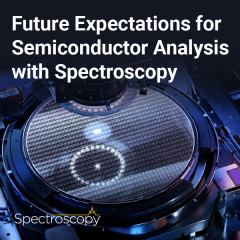
The next era of semiconductors demands smaller, faster, and cleaner processes. Experts highlight innovations in surface and depth analysis, native oxide control, and high-resolution metrology, alongside predictions for evolving environmental compliance and new materials.
Key discussion topics include:
- Upcoming analytical tools for atomic-level and 3D structures.
- Continued challenges of PFAS and global environmental standards.
- How emerging techniques will enable sub-nanometer process control.
Advertisement
Related to this article

Top articles include a compilation of some of our most popular evergreen content in 2026 and more.

Garth Simpson of Purdue University previews an upcoming chirality session at the Eastern Analytical Symposium and explains why the meeting’s blend of academic and industry researchers produces the most impactful science.

The Infrared and Raman Discussion Group’s 238th meeting on December 21 will feature the IRDG-Coblentz Lecture, two award presentations, and talks spanning clinical Raman, SERS, and ultrafast spectroscopy.
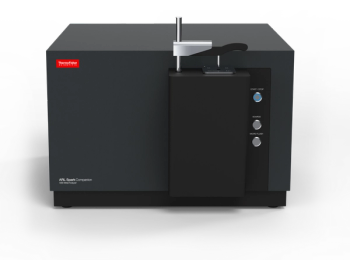
According to Thermo Fisher, the ARL Spark Companion pairs a multi-optics complementary metal-oxide-semiconductor (CMOS) detector with a compact spark source, aiming to move alloy verification out of external laboratories and closer to production.

Organized by CPACT, the April 27 to 29 meeting at the Marriott Pittsburgh City Center will bring together scientists, engineers, and vendors across the process industries, with keynotes on PAT, Raman, and NIR applications and an abstract deadline of December 7, 2026.

Garth Simpson of Purdue University outlines plans to survey more ordered molecular assemblies and to apply interface-specific chiral spectroscopy to enzyme reactors, solid-phase synthesis, spin-selective reactions, and, ultimately, a new analytical method.
In this Eastern Analytical Symposium (EAS) interview, Garth Simpson of Purdue University explains how a simple geometric effect at interfaces produced a 4.5-degree rotation in fluorescence emission from a naproxen monolayer.
Spectroscopy's editors gather 143 evergreen articles from 2026, including tutorials, terminology guides, technique reviews, application surveys, peer-reviewed research and the magazine's long-running columns, and organize them by subject so readers can build lasting knowledge one topic at a time.
Advertisement
Advertisement