Discover how spectroscopy delivers real-time, nondestructive measurement of soil, water, crop health, and food quality for faster, data-driven decisions. Learn how practical sensing solutions can support resource optimization and sustainable digital farming and food analysis.
Register Free: https://www.spectroscopyonline.com/spec_w/sensing
Event Overview:
This webinar will explore how spectroscopy is transforming digital farming by enabling real-time, nondestructive measurement of soil, water, and crop health, allowing faster and more informed agronomic decisions. It will highlight key challenges in agriculture—such as delayed lab feedback, inefficient resource use, and increasing regulatory pressure—and show how miniaturized and inline spectroscopic solutions address them with high-speed, reagent-free analysis. Attendees will gain insight into how to choose the most suitable spectroscopic technique for practical applications, including irrigation optimization, food quality assessment, and emissions monitoring for sustainable farming. The session will also demonstrate how photonics technologies bridge the gap between lab-grade analytics and scalable field deployment.
Key Learning Objectives
- Understand the role of spectroscopy in digital farming and food analysis, including how optical sensing enables real-time, nondestructive analysis of soil, water, and crop health.
- Evaluate and select appropriate spectroscopic techniques (e.g., grating-based, Fourier-transform-based and Fabry–Pérot-based) based on application requirements such as speed, cost, and integration constraints.
- Identify key use cases and value drivers, including yield optimization, food quality assessment, and emissions monitoring to meet sustainability and regulatory demands.
Who Should Attend
- R&D engineers in spectroscopy, photonics, and optical sensing
- Product development engineers for agricultural technology and analytical instruments
- CTOs/technical directors in agricultural technology, food technology, and instrumentation
- System integrators and OEMs that are developing sensing solutions
- Precision agriculture/digital farming technology leads
- Agronomists and crop science specialists who are adopting smart sensing tools
- Quality control and process engineers in the food and feed industries
- Sustainability/environmental monitoring managers
- Innovation managers in agri-food and agri-tech companies
- Academic researchers in spectroscopy, agriculture, and applied photonics
Speaker:
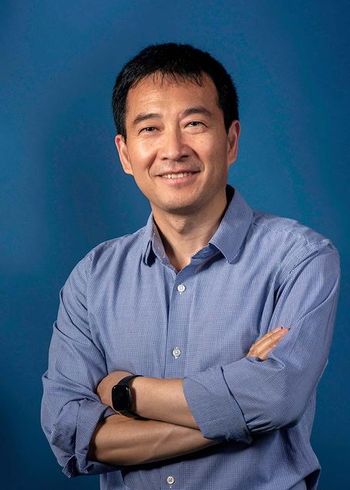
Gaetano Panagia
Technology and Market Expert
Hamamatsu Photonics Europe
Gaetano Panagia has been a technology and market expert at Hamamatsu Photonics since 2021. He specializes in gas sensing, agri-photonics, and food-sorting applications, curating technical content promotion, and conducting market research for mid-infrared detectors and spectrometers. He also contributes to Hamamatsu's Pilot Line service, helping customers to design, build, and mass-produce custom optoelectronic modules.
Register Free: https://www.spectroscopyonline.com/spec_w/sensing