SPEC PerkinElmer 11.10
|Articles|August 6, 2010

UV–vis

Joining us for this discussion are Jeff Comerford of Agilent Technologies; Richard Larsen of JASCO; and Alan Marks of Thermo Fisher Scientific.

UV-vis is an ubiquitous, workhorse technique that is critical to spectroscopic research, and its value and importance are increasing as demand for higher throughput and productivity grows. Joining us for this discussion are Jeff Comerford of Agilent Technologies; Richard Larsen of JASCO; and Alan Marks of Thermo Fisher Scientific.

UV–vis is generally considered a mature technology. In what area is it possible that we will see new developments and advancements?

Comerford:Over recent years, developments have been made in analyzing small liquid volumes, e.g.

Related to this article

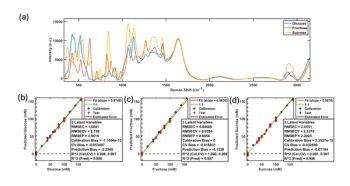
Monitoring Sugar Consumption and Ethanol Production During Yeast Fermentation Using a Raman Plate Reader and Multivariate Analysis
This column shows that a Raman plate reader paired with partial least squares regression can simultaneously quantify glucose, fructose, sucrose, and ethanol in yeast fermentation samples, using turbidity-matched calibration standards to correct for yeast-induced turbidity, and offers a rapid, label-free, high-throughput method for tracking sugar consumption and ethanol production in strain screening, media optimization, and process development.
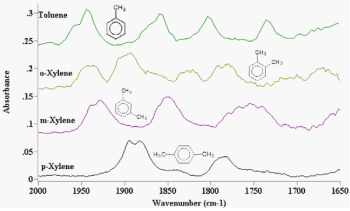
Highly Substituted Benzene Rings—The Rest of the Story II: Spectra
This column, the second installment on highly substituted benzene rings, shows that tri- and tetra-substituted substitution patterns can be distinguished by whether the ring bending peak is present and by the position of the in-phase aryl C-H wagging peak, which shifts according to how many adjacent hydrogens the ring carries.
Healthcare administrator reviewing an insurance policy schedule with a stethoscope on a clipboard, health insurance coverage, medical underwriting, prior authorization, and patient claims processing. | Image Credit: Joi_studio - stock.adobe.com
In a SciX interview, Marc Porter covered a lot of ground, from a student-driven pivot into immunoassays to a baseball analogy for Stokes and anti-Stokes scattering, and shares the open questions he is still chasing.