

Integrating peak position, height, and width information is important to properly interpret infrared spectra. But do you understand why peak heights and widths vary? We explain.

Brian C. Smith, PhD, is the founder and CEO of Big Sur Scientific, a maker of portable mid-infrared cannabis analyzers. He has over 30 years experience as an industrial infrared spectroscopist, has published numerous peer-reviewed papers, and has written three books on spectroscopy. As a trainer, he has helped thousands of people around the world improve their infrared analyses. In addition to writing for Spectroscopy, Dr. Smith writes a regular column for its sister publication Cannabis Science and Technology and sits on its editorial board. He earned his PhD in physical chemistry from Dartmouth College.
Integrating peak position, height, and width information is important to properly interpret infrared spectra. But do you understand why peak heights and widths vary? We explain.

Articles in this column have addressed five main areas: theory, functional groups containing the C-H bond, those containing the C-O bond, those with the C=O bond, and those with organic nitrogen compounds. Here, we review the concepts.

We review one final organic nitrogen functional group, representing explosive compounds. This is the nitro group, which requires a different set of interpretation rules.

Spectroscopy
Here we delve into the interpretation of another organic nitrogen compound, known as polyurethane, a ubiquitous polymer used for wood finishes and foam rubber.
Spectroscopy
Here, we continue our examination of the infrared (IR) spectra of organic nitrogen compounds with imides, which are a common chemical intermediate. IR can be used not only to identify imides, but also to distinguish between straight chain and cyclic imides. We explain how.
Spectroscopy
The N-H stretching and bending peaks can be used to distinguish primary, secondary, and tertiary amides and to ascertain protein structure. Here’s how.
Spectroscopy
Amides are an important functional group found extensively in polymers and proteins. There are three different families of amides. Here, is explained how to distinguish them using infrared spectroscopy.
Spectroscopy
The amine salt functional group contains ionic bonding, and is extremely polar, giving rise to a number of intense and uniquely placed peaks that are easy to identify for primary, secondary, and ter tiary amines.
Spectroscopy
Nitriles are easy to spot because of the unusual intensity and position of the C≡N stretching peak.
Spectroscopy
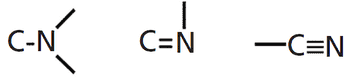
A detailed guide to interpreting the infrared spectra of organic nitrogen compounds, including secondary and tertiary amines.
Spectroscopy
So far, we have restricted our discussion to organic functional groups that contain carbon, hydrogen, and oxygen, with past columns addressing the theory of infrared spectral interpretation of C-H bonds, C-O bonds, and the C=O functional group. We now turn our attention to interpretation involving organic nitrogen compounds.
Spectroscopy
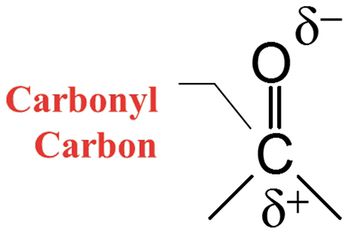
We review the group wavenumbers of the many carbonyl-containing functional groups we have examined this year and discuss how to distinguish these functional groups from each other.
Spectroscopy
Aromatic esters follow the ester Rule of Three, but each of these three peak positions is different for saturated and aromatic esters, which makes them easy to distinguish. Organic carbonates are structurally similar to esters and follow their own Rule of Three.
Spectroscopy
Esters are a common and economically important functional group made by reacting an alcohol and a carboxylic acid.
Spectroscopy
We will discuss three different types of ether, which are characterized by the type of carbons attached to the central oxygen.
Spectroscopy
We now turn our attention to the C-O bond, how to detect its presence in a sample from an infrared (IR) spectrum, and a study of the functional groups that contain this bond. In this first installment on the topic, we study the spectra of alcohols and learn to distinguish primary, secondary, and tertiary alcohols from each other based on their infrared spectra.
Spectroscopy
Now that we have completed our discussion of benzene rings and the infamous “benzene fingers,” the next topic on our hydrocarbon hit parade are carbon-carbon double and triple bonds. C=C bonds, otherwise known as alkenes, come in six different structural isomer types, while triple bonds, known as alkynes, come in two varieties. This column provides you with all the tools you need to distinguish all of these different types of molecules from each other.
Spectroscopy
With the theoretical background of benzene analysis laid out in part 1 of this series, we now know what fundamental, overtone, and combination bands look like. Here, I show that the benzene fingers are a series of overtone and combination bands that can be used to distinguish substituted benzene rings from each other when other methods do not work. I review the benzene finger patterns for mono-, ortho-, meta-, and para- substituted benzene rings, and describe an easy mnemonic in which you use your fingers to help you remember the patterns.
Spectroscopy
This installment begins with a needed discussion on the theory behind the three different types of infrared bands, how to recognize them, and how to use them to help you interpret spectra. Continuing on from the last column, this knowledge is used to help better distinguish mono- and di-substituted benzene rings from each other.
Spectroscopy
Following up on the last installment, we examine the infrared spectra of mono- and di-substituted benzene rings. We will examine numerous example spectra and learn how the position of C-H wagging peaks, and the presence or absence of a ring-bending peak, allow one to distinguish between mono-, ortho-, meta-, and para-substituted rings most of the time.
Spectroscopy
Continuing our theme of investigating the infrared spectra of hydrocarbons, we look at the nature of aromatic bonding and why aromatic rings have unique structures, bonding, and infrared spectra. Then we examine, in detail, the spectra of mono- and di-substituted benzene rings, and learn that infrared spectroscopy easily distinguishes between ortho-, meta-, and para- structural isomers.
Spectroscopy
We wrap up our introduction to the theory of infrared spectral interpretation with a discussion of the correct process to follow when interpreting spectra. The author has developed this 12-step system over many years of interpreting spectra, and finds it gives him the best results. The process includes knowing how a spectrum was measured, systematically identifying peaks, and the proper use of infrared spectral interpretation aids. The answer to last column’s quiz is also disclosed.
Spectroscopy
Identity testing is used in the pharmaceutical, food, and dietary supplement industries (amongst others) to ensure raw materials and final products have the correct chemical composition by answering the spectral question: Are these two samples the same? The first part of this installment instructs readers on the correct way to perform identity testing. The interpretation portion of the installment wraps up our discussion of straight chain alkanes by discussing how to determine chain length from infrared spectra. We also go over the answer to the problem from the last installment.
Spectroscopy
Continuing the theory and practice themes from previous columns, the theory portion of this column will be a discussion of the proper way of handling the infrared spectral interpretation of mixtures. In my opinion, mixtures are the biggest obstacle to interpreting infrared spectra, and I will share with readers five tried-and-true techniques for dealing with them. The practice portion of the column will give the answer to the last installment’s problem, and complete the spectral analysis of straight chain alkanes.
Spectroscopy
Interpreting infrared spectra is fun, but to do it properly one must be grounded in theory, which might be not so enjoyable for some. To cover theory and interpretation judiciously, this installment (and the next several installments) will begin with a section on theory and end with coverage of interpreting spectra. Here, we introduce the theory behind light and spectral units and the interpretation of methyl and methylene groups contained in straight alkane chains.
Spectroscopy
There is a continuing need for Fourier transform infrared (FT-IR) users to receive training in how to interpret the infrared spectra they measure. This new column will provide practical advice about how to do this. This first installment will present why this type of column is important, discuss some basic IR theory, and lay out a blueprint for future installments.