A competitive job market requires candidates to differentiate themselves in order to secure employment. Hear from experts in the field about the skills spectroscopists need to have to succeed in this ever-changing job market.

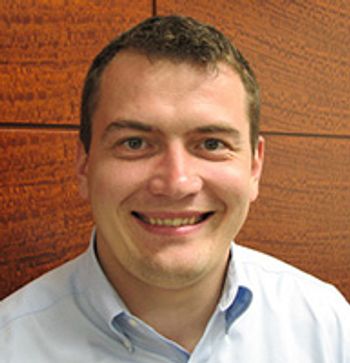
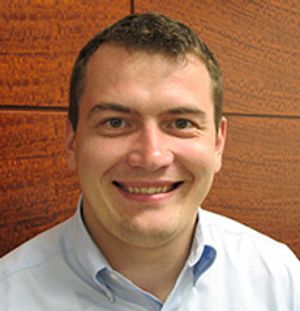
Dmitry Kurouski is an associate professor of biochemistry and biophysics, and biomedical engineering at Texas A&M University. Kurouski’s work has focused on pioneering the development of innovative Raman spectroscopy–based sensing approaches that can be used for non-invasive, non-destructive analysis, including confirmatory diagnostics of biotic and abiotic stresses in plants. His findings demonstrate that Raman spectroscopy can be used for identification of viral, fungal, and bacterial diseases in a large number of plant species. He has also developed Raman methods for diagnostics of plant deficiencies in micro and macro element composition; his work has also demonstrated the potential for Raman spectroscopy–based phenotyping of plants.
A competitive job market requires candidates to differentiate themselves in order to secure employment. Hear from experts in the field about the skills spectroscopists need to have to succeed in this ever-changing job market.

In this interview clip, Dmitry Kurouski, an Associate Professor of Biochemistry and Biophysics, and Biomedical Engineering at Texas A&M University, explains how his work is helping to develop a library of spectra and chemometric methods.
In this interview clip, Dmitry Kurouski, an Associate Professor of Biochemistry and Biophysics, and Biomedical Engineering at Texas A&M University, explains the resilience and limitations of near-infrared excitation Raman spectroscopy (NieRS).
In this interview clip, Dmitry Kurouski, an Associate Professor of Biochemistry and Biophysics, and Biomedical Engineering at Texas A&M University, explains why combining near-infrared excitation Raman spectroscopy (NieRS) with partial least squares–discriminant analysis (PLS-DA) created a robust method for identifying dyes.
In this interview clip, Dmitry Kurouski, an Associate Professor of Biochemistry and Biophysics, and Biomedical Engineering at Texas A&M University, explains the benefit of using near-infrared excitation Raman spectroscopy (NieRS) over high-performance liquid chromatography (HPLC) for forensic dye analysis.
Spectroscopy
In celebration of Spectroscopy’s 35th Anniversary, leading experts discuss important issues and challenges in analytical spectroscopy.
Spectroscopy
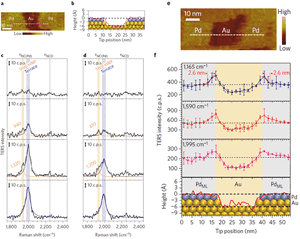
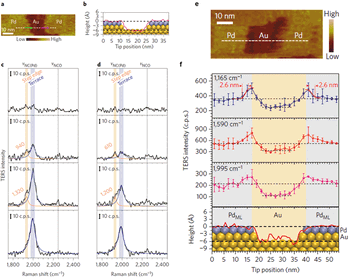
TERS has sub-nanometer spatial resolution and single-molecule sensitivity, making it useful for exploring structure and dynamics at the nanoscale in fields such as biology and electrochemistry.

March 17th 2026
March 18th 2026
June 1st 2020