The following articles are the most accessed digital object identifier (DOI) manuscripts for Spectroscopy and LCGC International during the month of August 2026. Ten articles are individually ranked here by DOI page views.
Welcome to “Analytically Speaking,” the podcast from LCGC International and Spectroscopy.
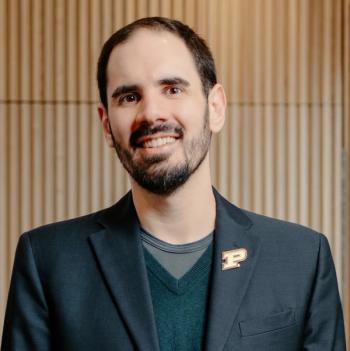
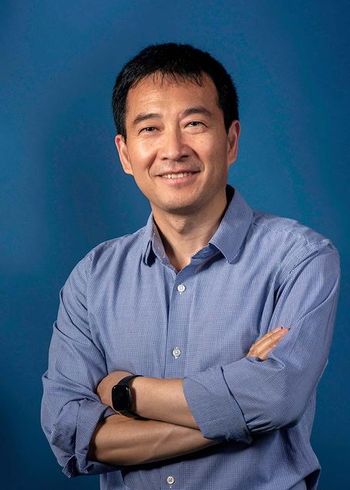
Here in Episode #47, podcast host Dr. Jerry Workman speaks with Dr. Thomas Mayerhöfer from the Leibniz Institute of Photonic Technology (Leibniz IPHT) in Jena, Germany, and Friedrich Schiller University Jena, about “the other half” of the Beer–Lambert law: dispersion theory, the concentration law of the refractive index, and refractive-index and complex-valued chemometrics. Dr. Mayerhöfer, who first joined the podcast for Episode #29 on the history and theory of infrared spectroscopy, returns to explain how Beer’s law falls out of dispersion theory as a limiting case, why the refractive index obeys a concentration law of its own that was mainstream physical chemistry before about 1920 (and helped confirm the Kekulé structure of benzene), and how new refractive-index and complex-valued chemometric methods — in combination with PLS — can outperform conventional absorbance-based calibration by up to an order of magnitude.
References and Further Reading
“The Other Half of Beer’s Law: Dispersion Theory, the Concentration Law of the Refractive Index, and Refractive-Index Chemometrics”
Website (LinkedIn):
Google Scholar:
Books and Articles
(1) Mayerhöfer, T. G. Wave Optics in Infrared Spectroscopy: Theory, Simulation and Modeling; Elsevier: Philadelphia, PA, 2024.
(2) Mayerhöfer, T. G.; Pahlow, S.; Popp, J. The Bouguer–Beer–Lambert Law: Shining Light on the Obscure. ChemPhysChem 2020, 21 (18), 2029–2046.
(3) Mayerhöfer, T. G.; Popp, J. Beer's Law Derived from Electromagnetic Theory. Spectrochim. Acta, Part A: Mol. Biomol. Spectrosc. 2019, 215, 345–347.
(4) Mayerhöfer, T. G.; Popp, J. Beer's Law—Why Absorbance Depends (Almost) Linearly on Concentration. ChemPhysChem 2019, 20 (4), 511–515.
(5) Mayerhöfer, T. G.; Pipa, A. V.; Popp, J. Beer's Law—Why Integrated Absorbance Depends Linearly on Concentration. ChemPhysChem 2019, 20 (21), 2748–2753.
(6) Mayerhöfer, T. G.; Dabrowska, A.; Schwaighofer, A.; Lendl, B.; Popp, J. Beyond Beer's Law: Why the Index of Refraction Depends (Almost) Linearly on Concentration. ChemPhysChem 2020, 21 (8), 707–711.
(7) Mayerhöfer, T. G.; Popp, J. Beyond Beer's Law: Revisiting the Lorentz–Lorenz Equation. ChemPhysChem 2020, 21, 1218–1223.
(8) Mayerhöfer, T. G.; Ivanovski, V.; Popp, J. Infrared Refraction Spectroscopy. Appl. Spectrosc. 2021, 75 (12), 1526–1531.
(9) Mayerhöfer, T. G.; Spange, S. Understanding Refractive Index Changes in Homologous Series of Unbranched Organic Compounds Based on Beer's Law. ChemPhysChem 2023, 24 (19), e202300430.
(10) Mayerhöfer, T. G.; Ilchenko, O.; Kutsyk, A.; Popp, J. Quantitative Chemometrics Using Refractive Index Spectra. Appl. Spectrosc. 2025, 79 (11), 1659–1664.
(11) Mayerhöfer, T. G.; Ilchenko, O.; Kutsyk, A.; Popp, J. Complex-Valued Chemometrics in Spectroscopy: Classical Least Squares Regression. Appl. Spectrosc. 2025, 79 (12), 1768–1775.
(12) Mayerhöfer, T. G.; Ilchenko, O.; Kutsyk, A.; Popp, J. Complex-Valued Chemometrics in Spectroscopy: Inverse Least Squares Regression. Appl. Spectrosc. 2026, 80 (1), 100–108.
(13) Mayerhöfer, T. G.; Ilchenko, O.; Kutsyk, A.; Popp, J. Complex-Valued Chemometrics in Spectroscopy: Principal Component Regression. Appl. Spectrosc. 2026, 80 (3), 301–310.
(14) Mayerhöfer, T. G.; Ilchenko, O.; Kutsyk, A.; Popp, J. Complex-Valued Chemometrics in Spectroscopy: Partial Least Squares Regression. Appl. Spectrosc. 2026, 80 (4), 416–427.
(15) Mayerhöfer, T. G.; Noda, I.; Popp, J. Reducing Non-Linearity in Spectral Evaluation via a Modified Lorentz–Lorenz Relation. Appl. Spectrosc. 2026, published online ahead of print.
(16) Mayerhöfer, T. G. Attenuated Total Reflection Infrared Spectroscopy: From Wave Optics to Correction and Quantitative Analysis; Elsevier: Philadelphia, PA, forthcoming 2027.
(17) Beer, A. Bestimmung der Absorption des rothen Lichts in farbigen Flüssigkeiten. Ann. Phys. Chem. 1852, 162 (5), 78–88.
(18) Beer, A. Einleitung in die höhere Optik; Vieweg: Braunschweig, Germany, 1853.
(19) Ostwald, W.; Luther, R. Hand- und Hülfsbuch zur Ausführung physiko-chemischer Messungen; Drucker, C., Ed.; Leipzig, Germany, 1893; subsequent editions 1902, 1910, and 1925.
(20) Roth, W. A.; Eisenlohr, F. Refraktometrisches Hilfsbuch; Veit: Leipzig, Germany, 1911.
(21) Haaland, D. M.; Thomas, E. V. Partial Least-Squares Methods for Spectral Analyses. 1. Relation to Other Quantitative Calibration Methods and the Extraction of Qualitative Information. Anal. Chem. 1988, 60 (11), 1193–1202.
(22) Workman, J.; Mark, H. Units of Measure in Spectroscopy, Part I: It’s the Volume, Folks! Spectroscopy 2014, 29 (2). Workman, J.; Mark, H. Units of Measure in Spectroscopy, Part III: Summary of Our Findings. Spectroscopy 2015, 30 (2).
(23) Landolt, H. Ueber die Brechungsexponenten flüssiger homologer Verbindungen. Ann. Phys. Chem. (Poggendorff’s Annalen) 1862, 117 (11), 353–371.
(24) Ladenburg, R. Die quantentheoretische Deutung der Zahl der Dispersionselektronen. Z. Phys. 1921, 4, 451–468.
(25) Thomas, W.; Reiche, F.; Kuhn, W. The f-Sum Rule. 1925. Thomas–Reiche–Kuhn sum rule relating oscillator strengths, integrated absorption, and optical constants.
(26) Mayerhöfer, T. G.; Ilchenko, O.; Kutsyk, A.; Piehler, S.; Silge, A.; Ramoji, A.; Winterfeld, A.; Ryabchykov, O.; Kiehntopf, M.; Bocklitz, T.; Popp, J. Complex-Valued Chemometrics for Analyzing Absorbance or Raman Spectra. Anal. Chem. 2026.
(27)
(28) Brush, S. G. Dynamics of Theory Change in Chemistry: Part 1. The Benzene Problem 1865–1945. Stud. Hist. Philos. Sci. 1999, 30 (1), 21–79.
Dwight Stoll, PhD:
Dwight R. Stoll is a professor of chemistry at Gustavus Adolphus College in St. Peter, Minnesota. He received his PhD from the University of Minnesota, under Professor Peter Carr, working on the development of fast, comprehensive two-dimensional liquid chromatography (2D-LC). Stoll’s current primary research focus is on the development of 2D-LC for both targeted and untargeted analyses. Active research projects in his laboratory touch on most aspects of multidimensional separation methodologies, including optimization strategies, characterization of selectivity in reversed-phase LC, instrument development, and applications in biopharmaceutical analysis. Stoll is the author or co-author of more than 80 peer-reviewed publications and six book chapters and has instructed numerous short courses in 2D-LC. In 2011 he was the recipient of LCGC’s Emerging Leader in Chromatography Award. In 2017 he received the Georges Guiochon Faculty Fellowship, and was recognized with an Agilent Technologies Thought Leader Award. He is also a member of LCGC’s editorial advisory board and is the editor of the “LC Troubleshooting” column in LCGC.
Jerome Workman, Jr., PhD:
Jerome (Jerry) J. Workman, Jr. is the Associate Editorial Director for Spectroscopy. He has held positions as CTO, executive VP, senior research fellow, director, and senior scientist at companies of all sizes, from start-ups to world-leading corporations. He has been an adjunct faculty member of four universities and advised multiple graduate students. He has more than 75 U.S. and international patent applications and 30 issued U.S. and international patents and multiple trade secrets, as well as 500+ technical publications, and 20 reference book volumes on a broad range of spectroscopy and data processing techniques. He has received multiple awards from scientific societies, and has taught annual courses in spectroscopy, chemometrics, and statistics for the AOAC, ACS, ISA, FACSS, and at several universities and corporations. He is a Fellow of the American Institute of Chemists (FAIC), the American Society for Testing and Materials (ASTM), and the Royal Society of Chemistry in the UK (FRSC, CChem, CSci). Jerry holds B.A and M.A degrees from Saint Mary's University of Minnesota, and a PhD degree from Columbia Pacific University working in near-infrared spectroscopy. He is an alumnus of both Columbia University Business School and the MIT Sloan School of Management.
Analytically Speaking, the podcast from LCGC and Spectroscopy, addresses important issues in separation science and analytical spectroscopy. Topics include new analytical techniques, methods, and approaches; the latest trends; advances in instrument and software technology; practical solutions for specific applications; recent papers in the scientific literature and their applicability; challenges and solutions for data analysis and interpretation; analytical chemistry theory and fundamentals (from advanced research to tutorials and troubleshooting); and more. Our regular hosts are Dwight Stoll, PhD, a professor of chemistry at Gustavus Adolphus College in St. Peter, Minnesota, and Jerry Workman, PhD, a spectroscopist, noted author, and currently the Associate Editorial Director for Spectroscopy. Dwight covers separation science and Jerry addresses spectroscopy related topics.
Subscribe to
Email us at
To advertise on the show, contact Ed Fantuzzi at