

This dynamic video from the Winter Conference on Plasma Spectrochemistry reveal 2026 trends in plasma MS, imaging, and clinical analysis.
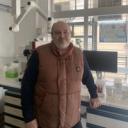
Martin Resano is a Coordinator of the Rapid Analysis Methods with Spectroscopic Techniques (MARTE) group and as part of the Aragon Institute for Engineering Research (I3A) at the University of Zaragoza. His research group works with inductively coupled plasma–mass spectrometry (ICP-MS) and laser-assisted techniques to develop minimally invasive approaches for clinical analysis.
This dynamic video from the Winter Conference on Plasma Spectrochemistry reveal 2026 trends in plasma MS, imaging, and clinical analysis.
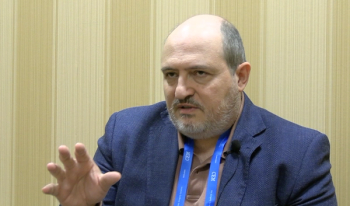
In the final part of our conversation with Martin Resano, he discusses how the use of partial least squares (PLS) regression improves the quality of the isotopic analysis data.
In this video segment, Martin Resano of the University of Zaragoza talks about the challenges and advancements in obtaining isotopic information using atomic spectroscopy.
In this edition of “Inside the Laboratory,” Martin Resano, a Coordinator of the Rapid Analysis Methods with Spectroscopic Techniques (MARTE) group and as part of the Aragon Institute for Engineering Research (I3A) at the University of Zaragoza, discusses how compressed sensing spectroscopic techniques are used in his laboratory.
January 27th 2026
January 21st 2026
January 23rd 2026