
This dynamic video from the Winter Conference on Plasma Spectrochemistry reveal 2026 trends in plasma MS, imaging, and clinical analysis.

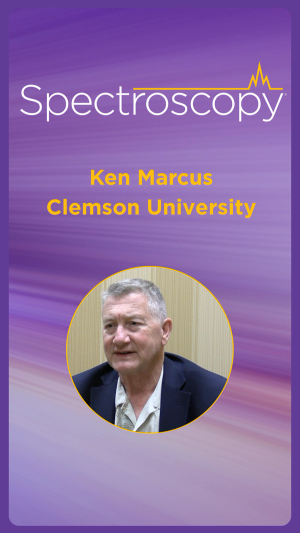
Ken Marcus is a Robert Adger Bowen Professor of Chemistry at Clemson University. He is an internationally recognized analytical chemist with a distinguished career spanning education, research, and mentorship. Over nearly four decades on the Clemson University faculty, he has supervised the graduation of 44 PhD and 17 MS students and has served on the editorial advisory boards of three international journals. His scientific achievements have been widely honored, including the South Carolina Governor’s Award for Excellence in Science Research (2001), Fellowships in the Royal Society of Chemistry (2010), the American Association for the Advancement of Science (2012), the Society for Applied Spectroscopy (2016), and the National Academy of Inventors (2018). Marcus’ research centers on the development of advanced plasma-based techniques for atomic spectroscopic analysis.
This dynamic video from the Winter Conference on Plasma Spectrochemistry reveal 2026 trends in plasma MS, imaging, and clinical analysis.
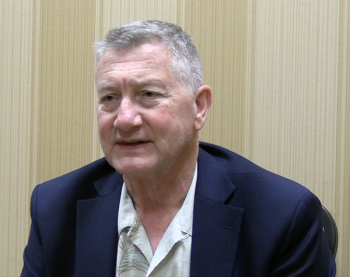
In the final part of our conversation with Ken Marcus, he discusses how external acquisition systems enhance isotopic precision and what spectroscopic trends experts should be paying attention to in 2026.
In the second part of our conversation with Ken Marcus, he discusses the parameters that are most influential in enhancing Nd isotope ratio measurements, and the implications of monitoring oxide species rather than atomic ions for isotope ratio analysis, and the benefits and challenges of this approach.
In the first part of our interview with Ken Marcus of Clemson University, he discusses what he enjoys about the Winter Conference on Plasma Spectrochemistry. Marcus also dives into his research and how the instrumentation his group uses allows for better separation of isobars without the need for chemical intervention, enhancing the accuracy of mass spectrometry (MS) readings.

Spectroscopy
The need for reference materials that can be applied in the area of thin films analysis has long been realized but is still, in general, under-addressed. Alumina films of single-micrometer thickness, having either fine distributions of impurities or delta function impurity marker layers, can be prepared routinely by anodic oxidation of electropolished aluminum specimens in appropriate electrolytes. Selected films were examined by transmission electron microscopy (TEM) and analyzed by radio frequency glow discharge optical emission spectroscopy (rf-GD-OES), providing very rapid, yet high-resolution, depth-resolved analysis of these electrically insulating materials.
January 28th 2026
January 23rd 2026
January 19th 2026
May 6th 2026