
Spectroscopy
Good practice (GxP) regulations require an instrument maintenance and use log. Have spectroscopy laboratories and software suppliers emerged from the Middle Ages yet?
Spectroscopy
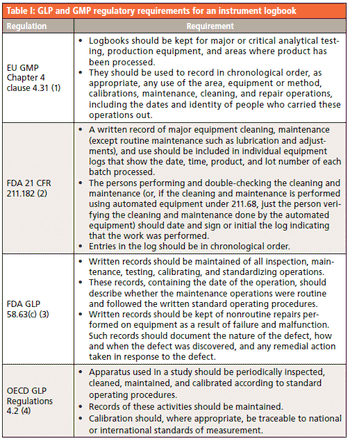
Good practice (GxP) regulations require an instrument maintenance and use log. Have spectroscopy laboratories and software suppliers emerged from the Middle Ages yet?

Spectroscopy
It has been 20 years since 21 CFR 11 came into effect. And with increased emphasis on data integrity, an audit trail is essential for spectroscopy software. Why then do many audit trails fail to meet regulatory requirements?
Spectroscopy
The new version of United States Pharmacopeia general chapter “Analytical Instrument Qualification” became effective August 1, 2017. What does this mean for you?
Spectroscopy
Data integrity requires a multilayered approach that runs throughout a regulated organization. Here we discuss the laboratory level.
Spectroscopy
Data governance requires a multi-layered approach that runs throughout a regulated organization from top to bottom. Although data governance features in the majority of GxP data integrity guidance documents, the approach to the topic should be business-driven rather than regulatory-driven.
Spectroscopy
Raw data is a term that is often used in both good manufacturing practice (GMP) and good laboratory practice (GLP) laboratories but can create confusion and misunderstanding. What exactly does it mean and what records are within the scope of the term?
Spectroscopy
In April 2016, the FDA issued a draft guidance for industry on data integrity and compliance with cGMP. What does this mean for the laboratory?
Spectroscopy
Data integrity is currently the hottest topic in regulated laboratories. Understanding what constitutes data integrity and the interactions between the layers is the challenge to ensure that data are accurate, correct and complete. Are you up to the challenge?
Spectroscopy
Some parts of the FDA’s new draft guidance for Development and Submission of NIR Analytical Procedures are reviewed and critiqued. What’s in it for spectroscopists?
Spectroscopy
A current hot topic in regulated GXP laboratories is data integrity. Recently, the UK regulator issued an industry guidance on this subject that requires the establishment of a data governance system, part of which is data integrity training. Easy to say, but how do you do it?
A proposed update to USP on Analytical Instrument Qualification (AIQ) has been issued for public comment. Here, we identify the changes that are proposed and their impact on the AIQ process of analytical instruments and laboratory computerized systems.
Spectroscopy
This month we discuss ISO Guide 80, "Guidance for the In-House Preparation of Quality Control Materials." This practical guide is worth reading, and its contents should be compared with your current working practices. In addition, we look at options for the preparation of working solutions from stock solutions to see the errors that could occur.
Special Issues
The European regulations on good manufacturing practices (GMPs) - Annex 11 - are having a strong influence on good laboratory practice (GLP) and good clinical practice (GCP).
Spectroscopy
The European regulations on good manufacturing practices (GMPs) - Annex 11 - are having a strong influence on good laboratory practice (GLP) and good clinical practice (GCP).
Spectroscopy
Recently, regulators in both the United States and United Kingdom issued guidance concerning laboratory data integrity that followed serious noncompliances found during inspections. Here, we explore what this guidance means for spectroscopy systems used for analysis in regulated laboratories and derive some common-sense guidance that you can follow.

Spectroscopy
A closer look at the U.S. Pharmacopeial Convention's (USP) draft general chapter <1029> on good documentation practices.
Spectroscopy
A review of the United States Pharmacopeial Convention (USP) stimulus paper on the revision process to adopt quality-by-design principles for the development, validation, and operation of analytical procedures used for good manufacturing practice (GMP) analysis - and how it compares to a draft guidances by the Food and Drug Administration (FDA) for industry on validation of analytical and bioanalytical procedures.
Spectroscopy
When a laboratory - particularly a regulated GxP laboratory - contemplates using the cloud, finding a suitable supplier is critical
Spectroscopy
A risk assessment helps determine the amount of qualification and validation work necessary to show that instruments and computerized laboratory systems are fit for their intended purpose. Here's how to do it.
Spectroscopy
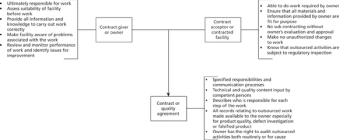
In pharmaceutical contract manufacturing, the work of analytical scientists is covered by a quality agreement, which is prepared by personnel in the quality control or quality assurance department and focuses on the laboratory analyses provided. But what exactly are quality agreements, why do we need them, who should be involved in writing them, and what should they contain? Here, we answer those questions.
Spectroscopy
A look at what the requirements are for "complete data" for laboratories working under the FDA GMP regulations. We also review the observations listed by inspectors on 483 forms from 2006 to 2012, to assess the common mistakes companies make.
Spectroscopy
Answers to common questions about operational qualification (OQ) software
Spectroscopy
A look at how the term commercial off-the-shelf can be abused in marketing literature.
Spectroscopy
Guidelines for writing standard operating procedures in a laboratory and best practices for their use.
Spectroscopy
A discussion of the various options for cloud computing, avoiding the marketing hype and focusing on the potential advantages and disadvantages for your laboratory
Spectroscopy
Here's what needs to be done to harmonize these two documents.
Spectroscopy
Continued discussion of the periodic review process, including how to conduct a review, the use of checklists, and reporting the outcome
Spectroscopy
Annex 11 to the EU's updated GMP regulations calls for periodic re-evaluation of computerized systems. This is what you need to know about the new rules.
Spectroscopy
The revisions to GMP Annex 11 are examined in terms of the impact on computerized spectrometry systems operating in regulated GMP laboratories.
Spectroscopy
Where is the dividing line between a simple mistake and falsification?