

The Eastern Analytical Symposium will take place November 16–18, 2026 in Plainsboro, New Jersey. Here, we preview the award winners.
The Eastern Analytical Symposium will take place November 16–18, 2026 in Plainsboro, New Jersey. Here, we preview the award winners.
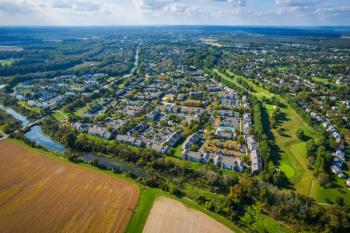
The Eastern Analytical Symposium will run November 16–18, 2026, giving laboratories and suppliers time to plan as venue details remain pending.
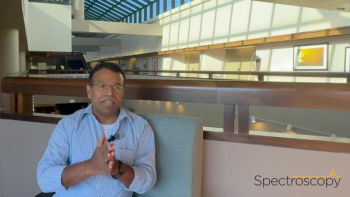
Damodaran Krishnan Achary explains how experimental NMR and computational chemistry work together to reveal the structure, dynamics, and reaction mechanisms of complex systems like ionic liquids.
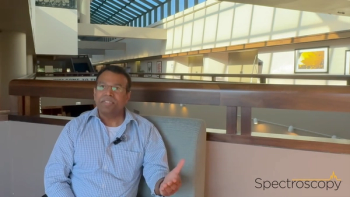
Damodaran Krishnan Achary of University of Pittsburgh highlights how modern NMR education is shifting toward real-world samples and interdisciplinary applications, reflecting the needs of industry and materials science researchers.
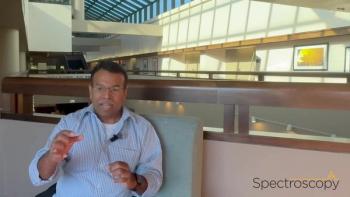
The University of Pittsburgh professor discusses how diffusion, relaxation, multinuclear, and ultra-high-resolution NMR experiments can be strategically applied to probe structure, dynamics, and interactions in complex chemical systems.
Damodaran Krishnan Achary discusses how advanced NMR techniques reveal the unique structure, cation–anion interactions, and dynamic behavior of ionic liquids, providing insights that other analytical methods cannot capture.
Damodaran Krishnan Achary discusses how modern NMR spectroscopy enables interdisciplinary research, from biomolecular studies to solid-state materials, and emphasizes the importance of staying current with advanced techniques and experimental strategies.

AlphaFold and similar tools don’t replace NMR—they amplify its power, freeing it to reveal the dynamic “dance” of molecules that static structures alone can never show.
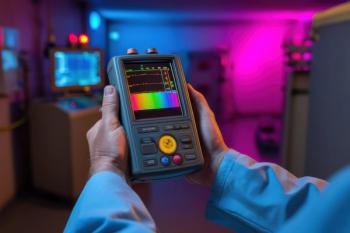
At the Eastern Analytical Symposium, Adam Hopkins of Metrohm highlighted how modern spectroscopy must balance precision with usability, showing that instruments optimized for real-world workflows often succeed more through practicality than perfection.
Karl Booksh, a Professor of Chemistry at the University of Delaware, has won the 2025 EAS Award for Outstanding Achievements in Chemometrics.
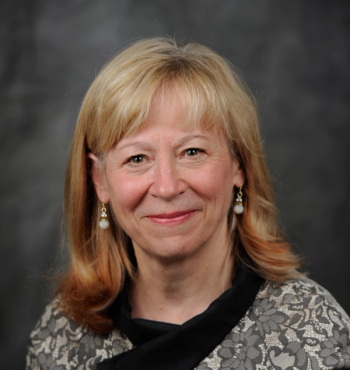
Geraldine L. Richmond, Presidential Chair in Science at the University of Oregon, has been awarded the 2025 NYSAS Gold Medal for her pioneering research on molecular interactions at liquid interfaces.
At the Eastern Analytical Symposium, Zachary Rhoden of Penn State shared practical strategies for training the next generation of analytical chemists through hands-on labs, small-scale experiments, model-building, and peer mentorship.
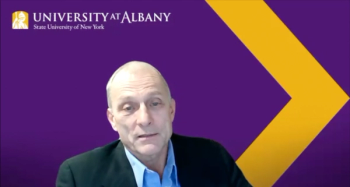
During EAS 2024, we interviewed Igor Lednev of the University of Albany about his storied career and his expectations for 2025.
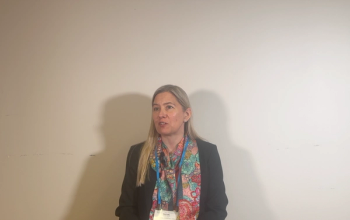
As part of our EAS 2024 coverage, we recently interviewed Rachel Martin of the University of California, Irvine about her work and her being awarded the EAS Award for Outstanding Achievements in Magnetic Resonance.
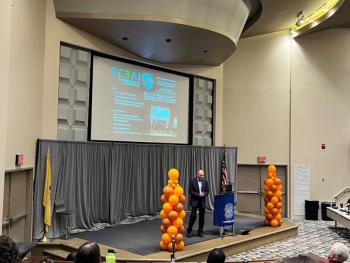
Igor Lednev, Rachel Martin, and Jeanne Pemberton were all honored at the 2024 Eastern Analytical Symposium for their work across in variety of spectroscopic techniques and applications.
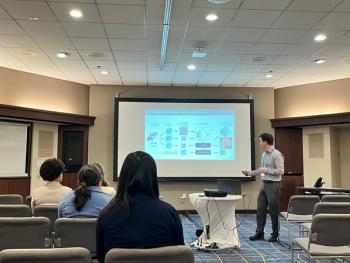
A Monday morning session at the Eastern Analytical Symposium in Plainsboro, New Jersey, highlighted hyperspectral and biological imaging techniques.
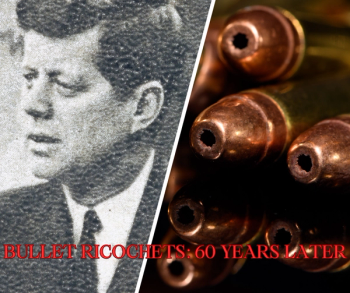
Pete Diaczuk of John Jay College of Criminal Justice gave a recollection at EAS 2023 of a case he worked on in Manhattan involving a victim fatally shot, incomplete ballistic evidence, and the wrong gun recovered at the scene.
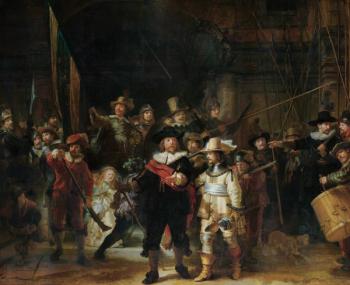
Is it a Rembrandt? Scientists tackling the toughest problems know the answers are never simple.
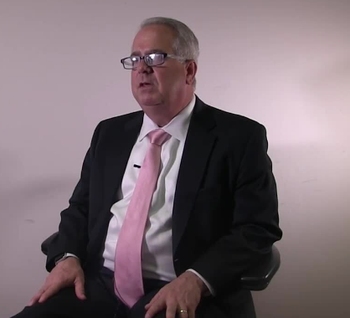
At the Eastern Analytical Symposium in Princeton, New Jersey, John McLean shared his thoughts about his career in mass spectrometry.
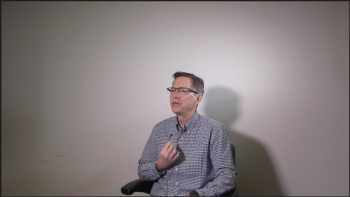
At the Eastern Analytical Symposium (EAS) in Plainsboro, New Jersey, Spectroscopy sat down with Robert Kennedy to discuss his research and career in analytical chemistry.
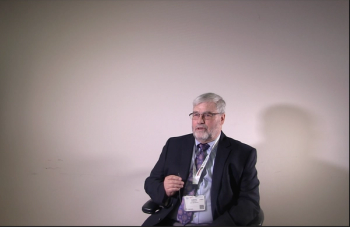
At the Eastern Analytical Symposium (EAS) in Plainsboro, New Jersey, Spectroscopy sat down with Curtis Marcott to discuss his research and career in spectroscopy.

Curtis Marcott, a senior partner at Light Light Solutions, a spectroscopic consulting firm based in Athens, Georgia, has been named the winner of the NY/NJ Section of the Society for Applied Spectroscopy Gold Medal Award.

Award recipient John McLean of Vanderbilt University said hybrid techniques do not exist purely as combinations of letters, slashes, and hyphens—they have been built on the shoulders of decades’ worth of analysis intended to refine and simplify workflow.
John A. McLean, Stevenson Professor of Chemistry and Chair of the Department of Chemistry, Associate Provost for Graduate Education, and Director of the Center for Innovative Technologies at Vanderbilt University, has been named the winner of the 2023 EAS Award for Outstanding Achievements in Mass Spectrometry.

Getting your finances in order ensures you can be prepared for the unexpected, said Tarshae Drummond, a lab manager and research technician at Fayetteville State University.
John H. Kalivas, a professor in the Department of Chemistry at Idaho State University, has been named the winner of the 2023 EAS Award for Outstanding Achievements in Chemometrics.
Professor Mary J. Wirth, W. Brooks Fortune Distinguished Professor Emerita at Purdue University, has been named the winner of the 2023 EAS Award for Outstanding Achievements in Separation Science.

Spectroscopy spoke with Raychelle Burks, PhD, of American University about diversity, equity, and inclusion (DEI) issues in analytical chemistry and whether applied or fundamental research is more important to the global economy.