In his SciX interview, Marc Porter discusses what happens to hydrogen when thiols bind to gold, how close analytical chemists can get to detecting a single molecule in a liter, and his new PFAS-focused startup.
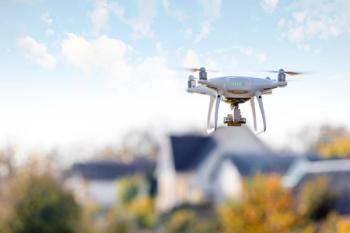
At SciX, Alessandro De Giacomo explained how airborne LIBS can produce quantitative results. Instead of relying on reference measurements, the method draws calibration directly from the measured signal, which sidesteps the drone’s positioning and motion problems.
At SciX, Jürgen Popp explains how miniaturized optical spectroscopy could add molecular data to wearable health tracking, which could enable earlier disease detection and a shift toward prevention.
At SciX, Jay Kitt describes the experiment he ran on his own that launched his cytochrome c research, and explains why putting a number on peptide–lipid interactions matters.
Jürgen Popp explains how head and neck surgeons in Jena use a Raman probe to locate tumor borders, why the technique could replace frozen section biopsies, and why optical tools must adapt to clinical workflows rather than the other way around.
At SciX, Marc Porter explains how a Thanksgiving batting lesson led him to compare a bat meeting a ball to light scattering off a molecule, and how his group is using simulations to test whether the analogy holds.
Alessandro De Giacomo argues that grounding students in scientific fundamentals, rather than rushing them toward applications, is what makes breakthrough ideas possible.
In this SciX interview segment, Siddhartha Das explains how his group’s simulations revealed a nanochannel scenario that produces energy and boosts flow at the same time. This overturns the classical electroviscous trade-off without breaking the laws of thermodynamics.