Jürgen Popp explains how head and neck surgeons in Jena use a Raman probe to locate tumor borders, why the technique could replace frozen section biopsies, and why optical tools must adapt to clinical workflows rather than the other way around.
At SciX, Jay Kitt describes the experiment he ran on his own that launched his cytochrome c research, and explains why putting a number on peptide–lipid interactions matters.
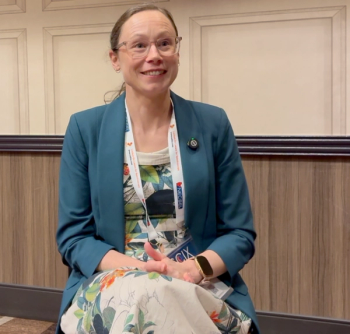
In this SciX interview, Jay Kitt, a Research Assistant Professor in the Department of Chemistry at the University of Utah, discusses how an experiment he ran on his own initiative, and a commitment to quantitative measurement, shaped his Raman spectroscopy research on membrane biochemistry.
Kitt said he was drawn to the research question because it represented high-impact biology, which is an area he believes vibrational spectroscopy has explored relatively little. He has become fascinated with using
The project began when Kitt pitched his advisor, Joel Harris, on studying the interaction between cardiolipin and cytochrome c, which occurs in mitochondrial membranes. Kitt hoped to learn why the protein induces pore formation and ultimately leads to apoptosis. Harris initially considered the idea too ambitious. Undeterred, Kitt mentioned in passing that he was ordering cytochrome c while Harris was busy writing grants, then ran the first experiments to completion before revealing the results. Harris was enthusiastic, and the two laughed about the parallel: as a graduate student, Harris had once run an experiment he had been told not to do while his own advisor was out of town.
Kitt also discussed work involving gramicidin, which forms ion channels through an interaction between two membrane-spanning peptides rather than acting as a true pore former. Similar interactions, he suggested, may occur among other such peptides. By measuring the number of lipids associated with the peptide, the researchers could determine the size of the lipid shell surrounding it in the bilayer and how much of the bilayer it disrupts.
That matters because pore-forming