News|Videos|October 22, 2026

Marc Porter on Open Questions, Detection Limits, and What Comes Next

In his SciX interview, Marc Porter discusses what happens to hydrogen when thiols bind to gold, how close analytical chemists can get to detecting a single molecule in a liter, and his new PFAS-focused startup.

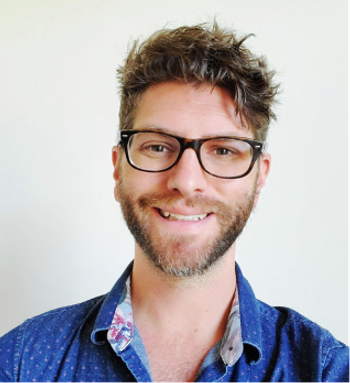
As he reflected on what comes next in his career, Marc Porter, a Distinguished Professor Emeritus in Chemistry and Chemical Engineering at the University of Utah, is turning his attention to questions that his research has left unanswered. In this segment of our interview with Porter at the 2026 SciX Conference, Porter discussed two research problems he hopes to pursue, a new startup, and what has made his career worthwhile.

Porter explained that, after reflecting on what questions his group has yet to answer, he keeps coming back to a deceptively simple one: where does the hydrogen go when an alkanethiol adsorbs on gold? Researchers know that a gold–sulfur bond forms, but the fate of the hydrogen remains unresolved. It could leave as hydrogen atoms, as a proton, or as some mix of products. Porter is now drafting a proposal to seek funding to answer the question. He acknowledged that the answer may not carry major implications, but said it is part of understanding the mechanism of what takes place.

His second area of interest is the ultimate limit of detection. In a nanoscience course he taught, Porter challenged students to consider whether a single molecule in a liter could be detected. With full freedom to design the experiment, from choosing analytes with high molar absorptivity to using the highest-power lasers available, he wonders whether analytical chemists can set a new record. Physics has the speed of light as its universal limit, he noted, and the question is what analytical chemistry can claim as its own. Even if such measurements lack immediate relevance, Porter said, discoveries made along the way often prove important.

Porter also highlighted Litmus Analytical, his startup company developing a test for field-deployable measurements of per- and polyfluoroalkyl substances (PFAS).

Porter closed by reflecting on his career. Aside from days packed with committee meetings, he said, the work has been a rush, and with the right collaborators, it makes work that much more enjoyable.

Further Reading

(1) Porter, M.; Workman, J., Jr.; Wetzel, W. Taming Serum Interference: Marc Porter on Moving SERS Immunoassays Toward the Clinic. Spectroscopy Online, 2026. https://www.spectroscopyonline.com/view/taming-serum-interference-marc-porter-on-moving-sers-immunoassays-toward-the-clinic (accessed October 13, 2026).



Related to this article

Work of the surgeon in the hospital operating room. Concentrated doctor with glasses. | Image Credit: © velimir - stock.adobe.com
Jürgen Popp explains how head and neck surgeons in Jena use a Raman probe to locate tumor borders, why the technique could replace frozen section biopsies, and why optical tools must adapt to clinical workflows rather than the other way around.