SPEC PerkinElmer 11.10
Publication|Articles|March 20, 2024

2024 Spectroscopy Employment Survey: Continuing Economic Pressures, and How It Impacts Spectroscopists

Author(s)Will Wetzel

2024 Spectroscopy Employment Survey

Continuing Economic Pressures, and How It Impacts Spectroscopists

Each year, Spectroscopy publishes a survey of our readership, detailing the latest trends in the job market. Last year, we documented how greater uncertainty in the job market was on the mind of some analytical scientists. With countries reporting economic recessions and companies laying off workers, analytical scientists experienced increased anxiety about job security. This year, they reported more of the same concerns and many are staying put in their current roles instead of seeking new opportunities, our survey found.

The reports highlights:

  • Salary and Compensation
  • Work Environment and Seeking Alternative Employment
  • A Look at the Current Job Market
  • Demographics and Methodology

Download the form here: https://www.email.mjhlifesciences.com/spectroscopy-2024-salary-survey


Related to this article

Monitoring Sugar Consumption and Ethanol Production During Yeast Fermentation Using a Raman Plate Reader and Multivariate Analysis
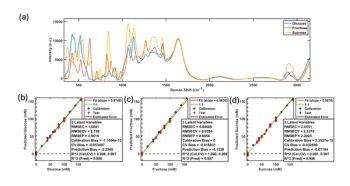
This column shows that a Raman plate reader paired with partial least squares regression can simultaneously quantify glucose, fructose, sucrose, and ethanol in yeast fermentation samples, using turbidity-matched calibration standards to correct for yeast-induced turbidity, and offers a rapid, label-free, high-throughput method for tracking sugar consumption and ethanol production in strain screening, media optimization, and process development.
Highly Substituted Benzene Rings—The Rest of the Story II: Spectra
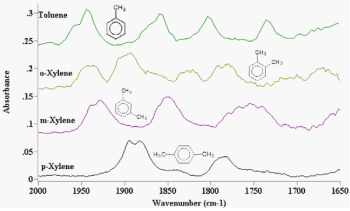
This column, the second installment on highly substituted benzene rings, shows that tri- and tetra-substituted substitution patterns can be distinguished by whether the ring bending peak is present and by the position of the in-phase aryl C-H wagging peak, which shifts according to how many adjacent hydrogens the ring carries.