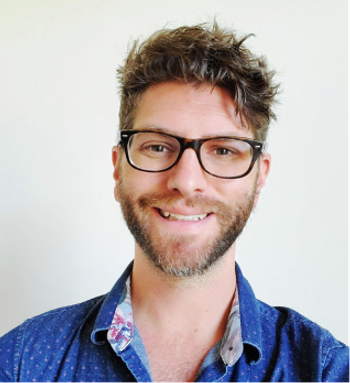
Amy Colleran, a Postdoctoral Researcher in the Centre of Metabolomics Research at the University of Liverpool, is exploring how to detect volatile organic compounds by bubbling them directly into colloidal silver and gold nanoparticles.
The New York / New Jersey Section of the Society for Applied Spectroscopy will present its 2026 Gold Medal Award to Richard Crocombe at the Eastern Analytical Symposium on November 17, recognizing two decades of work that helped carry spectroscopy out of the laboratory and into the field.
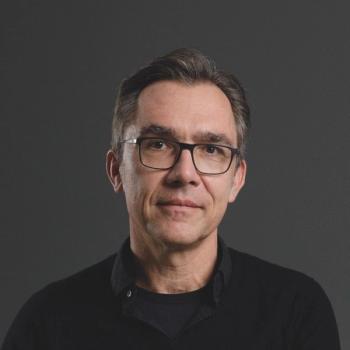
Richard Crocombe, principal of Crocombe Spectroscopic Consulting, has been named the 2026 recipient of the Gold Medal Award from the New York / New Jersey Section of the Society for Applied Spectroscopy (NYSAS). The section is honoring him for his many contributions to applied spectroscopy, particularly the development of portable spectroscopy.
The award will be presented on Tuesday, November 17, 2026, at the
For those who have followed the field, the recognition reflects a career spent asking a deceptively simple question: what does a spectrometer need to become when the person holding it is not a spectroscopist?
Crocombe’s path to portable spectroscopy ran through industry. Before founding his consultancy, he worked at a number of instrument companies, including Bio-Rad, Thermo Fisher Scientific, and PerkinElmer, where he developed new spectrometers and their applications. Along the way, he worked extensively with portable systems spanning Raman, mid-infrared, near-infrared, X-ray fluorescence (XRF), and gas chromatography–mass spectrometry (GC–MS).
Today, he advises early-stage companies, established manufacturers, and end users on the technologies and applications of portable spectrometers, as well as on go-to-market strategies. It is a role that draws on both sides of his experience: knowing how an instrument is engineered, and knowing what it takes for that instrument to succeed with its users.
His service to the spectroscopy community has been equally broad. Crocombe is a Fellow of SPIE and chaired its Next-Generation Spectroscopic Technologies conference for ten years. He served as President of the Society for Applied Spectroscopy (SAS) in 2020 and was the founding Editor-in-Chief of Applied Spectroscopy Practica, the society’s second scientific journal. He is also a former board member and secretary of The Coblentz Society.
He has published extensively on miniature and portable spectrometers. His comprehensive 2018 review in Applied Spectroscopy has been downloaded more than 36,000 times, and with Pauline Leary and Brooke Kammrath he co-edited the two-volume Portable Spectroscopy and Spectrometry, published by John Wiley in April 2021.
The Gold Medal follows earlier recognition from the Eastern Analytical Symposium: Crocombe received the
In his award address, Crocombe will look at where portable spectroscopy has been and where it is heading. Over the past 20 years, portable instruments have become smaller and lighter while growing more versatile and “smarter,” delivering actionable information directly to the operator. Recent advances include integration with unmanned platforms and a portable hyperspectral Raman instrument. Looking ahead, he expects developments in photonics, such as single-photon avalanche diode (SPAD) arrays, metamaterials, and photonic integrated circuits, to find their way into portable spectrometers in the near future.
A central theme of the talk is that hardware is only part of the story. The operators of fully integrated portable spectrometers are often non-scientists, so the instrument must be far more than a spectroscopic “engine.” It has to be built for field use, operable with gloved hands, and equipped with embedded spectral libraries or quantitative calibrations and the algorithms to turn a spectrum into a result without operator intervention. In Crocombe’s view, the importance of applications development to a portable instrument’s success is difficult to overstate.
The address will survey key field applications, including:
Crocombe will also explore less expected uses of portable spectroscopy, including the fast-growing area of wearables and other “wellness” devices, among them smart toilets. He will close with a discussion of how to succeed with miniature and portable spectrometers.
The New York Section of the Society for Applied Spectroscopy (NYSAS) played a foundational role in both the advancement of spectroscopy and the establishment of a national professional society dedicated to the field. Emerging during World War II, the New York group formed in 1945 to support the growing number of scientists using spectroscopy for industrial applications, many of whom lacked close ties to larger professional organizations like the American Chemical Society (ACS) and the American Physical Society (APS).1–3
By 1956, regional groups, led in part by the New York Section, collaborated to create the Federation of Spectroscopic Societies. Two years later, in a pivotal act of cooperation, the New York Section relinquished its name and journal—Applied Spectroscopy—to help found the national Society for Applied Spectroscopy (SAS) at the first Eastern Analytical Symposium in 1958.1,2
Before the national society’s founding, the New York Section had already established its leadership by creating the SAS Gold Medal Award in 1952. As the first major honor in the field, it recognized lifetime achievements in spectroscopy. Early recipients included luminaries such as William F. Meggers, William W. Coblentz, and George R. Harrison. The award continues to represent the highest distinction in applied spectroscopy today.3
Crocombe’s name now joins that list, and the setting is a fitting one: the same symposium where the national society was born nearly seven decades ago.
The award session will take place on Tuesday, November 17, 2026, at the Crowne Plaza Princeton Conference Center in Plainsboro, New Jersey, as part of the Eastern Analytical Symposium. NYSAS invites all interested attendees to join the technical session honoring Crocombe. Program details are available on the
(1) Society for Applied Spectroscopy, The Early Years of SAS Home Page. Available at:
(2) Society for Applied Spectroscopy, SAS History Home Page. Available at:
(3) The New York / New Jersey Section of the Society for Applied Spectroscopy, NYSAS GOLD MEDAL AWARD Home Page. Available at: