Top content published this week include a panel discussion with five SpecAcademy instructors and a feature article on Fourier transform infrared (FT-IR) spectroscopy.
In this Q&A, we provide an overview of what the latest “What’s Nu” covered, which includes new research in environmental analysis and clinical analysis.
How has spectroscopy training changed? A recent panel discussion explored this topic, discussing how SpecAcademy can widen access without losing the value of hands-on instruction.
FT-IR spectroscopy, long treated as a mature bench technique for confirming a carbonyl stretch or fingerprinting a polymer, has quietly become one of chemistry’s most versatile discovery engines: it now infers molecular structure straight from a spectrum without a reference library, resolves chemistry tens of nanometers wide, and screens a fingerstick of blood for disease in minutes. The last five years of published research show FT-IR moving from a confirmatory tool into a predictive, autonomous, and field-ready analytical platform.
In this panel discussion, five SpecAcademy instructors examined why spectroscopy expertise has declined and how SpecAcademy aims to rebuild it through curated, fundamentals-based education suited to increasingly complex analytical work.
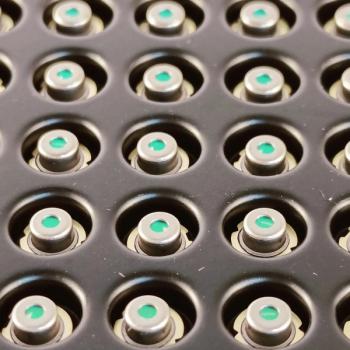
The agreement gives North American customers a stocked, domestic source for InGaAs PIN photodiodes and avalanche photodiodes from the Scottish manufacturer.