Traditional pharmaceutical manufacturing relies on large-scale batch production with quality control based on destructive chemical analysis. However, with the rise of personalized medicine, small-batch, patient-tailored drug products require alternative quantification techniques that are rapid and non-invasive. A new study published in the International Journal of Pharmaceutics explores the use of near-infrared (NIR) spectroscopy combined with chemometric modeling and stimulated Raman imaging to improve drug dose quantification for additively manufactured medications (1). NIR, when combined with AI, has great potential for improved analytical use in many applications (1,2).
Conducted by Ilari Ahola, Teemu Tomberg, Claus Cornett, Clare Strachan, Jukka Rantanen, and Natalja Genina from the University of Copenhagen and the University of Helsinki, the study focuses on optimizing non-destructive analysis for porous, inkjet-printed antidepressant drug formulations (1).
Enhancing NIRS Accuracy with Machine Learning
One of the key challenges in using NIR for porous drug products is the impact of structural variability, residual solvents, and fluctuating material density on spectral readings. The study addressed these issues by implementing a spinning NIR measurement setup and post-print drying to mitigate inconsistencies in quantification (1).
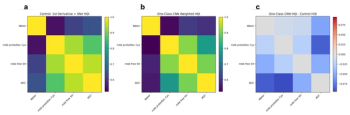
Additionally, researchers applied machine learning (ML), specifically support vector regression (SVR), to improve predictive accuracy. Their results demonstrated that SVR outperformed traditional linear partial least squares (PLS) regression by reducing prediction errors by 19%. However, when drug samples were categorized into subtypes based on their structural properties, linear PLS models performed equally or better than non-linear models. This finding underscores the importance of tailoring analytical models to specific sample characteristics (1).
Stimulated Raman Imaging Validates Structural Complexity
To further investigate the structural challenges affecting NIR accuracy, the team utilized stimulated Raman scattering (SRS) microscopy. Unlike conventional Raman imaging, SRS offers faster imaging speeds and improved signal strength, allowing researchers to visualize the distribution of the active pharmaceutical ingredient (API) within the porous matrix. This approach confirmed that structural differences among sample subtypes significantly influenced NIR performance, validating the need for targeted modeling strategies (1).
Implications for Personalized Medicine
The findings have significant implications for patient-specific drug manufacturing. The tunable modular design (TMD) approach, previously proposed by the researchers, integrates freeze-dried polymeric modules with inkjet printing to create customized antidepressant doses. Given that antidepressant tapering requires precise, often sub-milligram dosage adjustments, robust and reliable quantification is essential (1).
By incorporating advanced spectroscopic analysis and ML, this study presents a viable pathway for improving real-time, non-destructive quality control in personalized pharmaceuticals. The combination of NIR and SRS microscopy provides a comprehensive understanding of porous drug matrices, enabling more accurate and reproducible dose quantification (1).
As additive manufacturing gains traction in pharmaceutical applications, the need for efficient, precise, and scalable analytical methods grows. This research highlights the potential of integrating spectroscopy with ML to enhance drug quantification, offering a powerful tool for personalized medicine. Future studies may explore further refinements in modeling techniques and the application of these findings to a broader range of drug formulations.
References
(1) Ahola, I.; Tomberg, T.; Cornett, C.; Strachan, C.; Rantanen, J.; Genina, N. Understanding the Complexity of Near-Infrared Quantification of Highly Porous Patient-Tailored Drug Products Using Chemometrics and Stimulated Raman Imaging. Int. J. Pharm. 2025, 671, 125205. DOI: 10.1016/j.ijpharm.2025.125205
(2) Workman, Jr., J. NIR Spectroscopy with AI Proves to be a Powerful Combination for Tea Classification. Spectroscopy. Available at: https://www.spectroscopyonline.com/view/nir-spectroscopy-with-ai-proves-to-be-a-powerful-combination-for-tea-classification (accessed 2025-01-29).