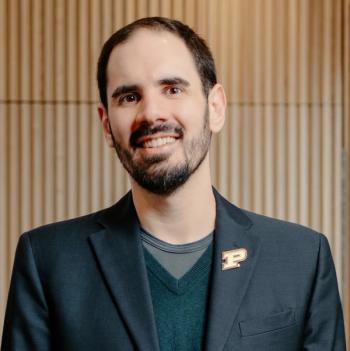
First up — can a chemical engineer make a natural switch to analytical spectroscopy? According to Ayush Agarwal, a postdoctoral researcher at the Federal Institute of Materials Testing in Berlin, the answer is yes. In our latest “Pathways in Spectroscopy” installment, Agarwal describes how his Ph.D. work on biogas sampling and nanoparticle characterization, supported by Professor Christian Ludwig's research group, helped him develop strong analytical skills and move beyond routine engineering tasks into advanced measurement science. He calls the transition smooth and natural, crediting hands-on research and great mentorship.
Next, we continue our series on NIR spectroscopy in archaeological analysis. Researcher Christina Ryder discusses how near-infrared spectroscopy can non-destructively assess collagen preservation deep within ancient bone — something traditional infrared and Raman techniques struggle to achieve. Her team compared two modeling approaches, finding that random forest models performed better on controlled data sets, while partial least squares regression proved more reliable for complex real-world samples.
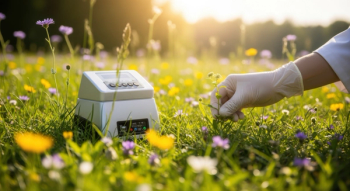
We also spoke with Jean-Baptiste David and Serge Gambarelli about miniaturized, chip-based EPR spectrometers — a development that could bring electron paramagnetic resonance technology into the field and into industries like food and beverage production.
And from the Spring SciX 2026 conference in Exeter, Professor Thomas Bocklitz shared key themes: integrating AI with vibrational spectroscopy, real-time biological analysis, and the ongoing debate around AI transparency versus efficiency.
Finally, a major new review reveals that biopharmaceutical analysis publications have grown 171% in a decade, with AI and deep learning now driving the next wave of quality control innovation.
That's your Best of the Week. We'll see you next time.
References
- Agarwal, A.; Wetzel, W. How Difficult is the Transition from Chemical Engineering to Spectroscopy? Spectroscopy. Available at: https://www.spectroscopyonline.com/view/how-difficult-is-the-transition-from-chemical-engineering-to-spectroscopy- (accessed 2026-04-28).
- Ryder, C. M.; Wetzel, W. Prescreening Collagen for Archaeological Bone. Spectroscopy. Available at: https://www.spectroscopyonline.com/view/prescreening-collagen-for-archaeological-bone (accessed 2026-04-28)
- David, J.-B.; Gambarelli, S.; Wetzel, W. Improving EPR Spectrometers for Field Deployment. Spectroscopy. Available at: https://www.spectroscopyonline.com/view/improving-epr-spectrometers-for-field-deployment (accessed 2026-04-28).
- Bocklitz, T.; Wetzel, W. The Key Takeaways from Spring SciX 2026. Spectroscopy. Available at: https://www.spectroscopyonline.com/view/the-key-takeaways-from-spring-scix-2026 (accessed 2026-04-28).
- Wetzel, W. AI and Automation Poised to Reshape Biopharmaceutical Quality Testing. Spectroscopy. Available at: https://www.spectroscopyonline.com/view/ai-and-automation-poised-to-reshape-biopharmaceutical-quality-testing (accessed 2026-04-28).