The 2026 SciX Conference will offer an assortment of short courses during the conference week in Sparks, Nevada. We highlight these courses below.
Top articles published this week include a preview of an upcoming presentation at the American Chemical Society (ACS) 2026 Fall Meeting in Chicago, Illinois.
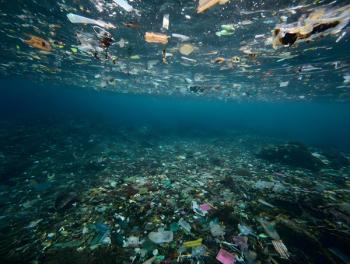
The American Chemical Society (ACS) 2026 Fall Meeting is coming up later in August, and one talk will highlight how fluorescence spectroscopy and high-frequency monitoring buoys can improve water quality assessment in Biscayne Bay. We’ll offer a preview of this presentation here. Also, are university science programs giving their students ample opportunities to grow their writing and communication skills? The answer may surprise you.
This is the Best of the Week.
First, a peer-reviewed study tackled a hit-and-run case by analyzing blended fibers from a car bumper and a victim's torn pants using four techniques together, which included infrared (IR) and Raman spectroscopy, light microscopy, and scanning electron microscopy–energy dispersive spectroscopy (SEM-EDS). Individually, IR and Raman could identify materials like polyester and cellulose, but they couldn't tell cellulose subtypes apart.1 That's where light microscopy stepped in, revealing the bumper sample contained cotton while the victim's sample contained viscose, which is a critical discrepancy.1 SEM-EDS sealed the case by detecting titanium, a polyester additive, in one sample but not the other.1 The key takeaway from this study is that combining multiple techniques significantly improves forensic accuracy over any single method alone.
Next, we examined a recent study from researchers in Innsbruck that tested handheld laser-induced breakdown spectroscopy, or LIBS, as a rapid field screening tool for illegal dyes in paprika powder.2 By measuring sodium signals from dye counter-ions, the method flagged suspect batches quickly, although laboratory confirmation is still needed before any final call.2
Also, we released a new "Pathways in Spectroscopy" clip that explored the importance of writing and communication skills in spectroscopy. Mary Kate Donais of St. Anselm College highlights that success in spectroscopy requires more than technical expertise and laboratory experience. Although students must develop strong scientific knowledge and practical skills with instrumentation, sample preparation, and analysis, she emphasizes that writing and communication are equally important for a successful career.3 Liberal arts colleges, Donais said, do a better job at giving students opportunities to build these skills in their academic careers, but many universities do not.3 This fact makes it important for students to actively develop their ability to communicate scientific ideas clearly through writing and presentations, even if it means cultivating these skills outside their classes.3
Finally, back to the ACS meeting: there will be a presentation on monitoring Biscayne Bay's water quality using fluorescence spectroscopy and real-time buoys.4 If you are in the environmental sciences, this is a talk that you would not want to miss.
And that’ll do it for Best of the Week. Thanks for watching, thanks for reading, and we’ll see you next week.