Feature|Articles|September 2, 2026

In Memoriam: John Philip Walters (July 4, 1938 - August 18, 2026)

Listen
0:00 / 0:00

Key Takeaways

  • Seminal work reframed analytical sparks as organized cyclic discharges with defined geometry, linking discharge growth kinetics to spectroscopic output and improving mechanistic interpretation of multielement emission measurements.
  • Patented excitation-source designs and industry consulting translated fundamentals into durable instrumentation, including a Jarrell-Ash–licensed spark source, while mentoring 17 PhD and 17 MS trainees plus undergraduates.
SHOW MORE

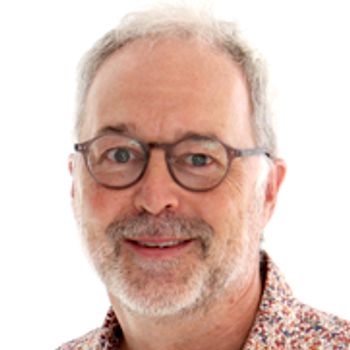
John Philip Walters, Ph.D. (1938-2026), was an analytical chemist who spent 17 years researching the physics of spark-discharge emission spectroscopy at the University of Wisconsin-Madison before moving to St. Olaf College in 1982, where he became best known for pioneering a role-playing undergraduate laboratory model that had students take on professional roles to mirror real analytical-chemistry work. His 1991 three-part series on the approach in Analytical Chemistry earned him the ACS Division of Analytical Chemistry's J. Calvin Giddings Award in 1993, and he continued extending his understand-the-system teaching philosophy into computer-controlled instrumentation well into his later career.

The analytical chemistry community has lost one of its most inventive and generous educators. John Philip Walters, Ph.D., a professor whose four-decade career bridged fundamental spectrochemical research and a lasting reinvention of how the discipline is taught, died August 18, 2026, in Northfield, Minnesota, at the age of 88.1,2 Colleagues in atomic spectroscopy remember him as a scientist who looked inside the electrical discharge and asked, patiently and rigorously, what was actually happening there; generations of students remember him as the professor who rebuilt the undergraduate laboratory around the working life of a real analytical chemist.

John was born July 4, 1938, in Elgin, Illinois, to Lester Lewis and Phyllis Imogene (Taylor) Walters1. His family relocated to Harlingen, Texas, in 1946 and returned to Elgin in 1950, where John graduated from Elgin High School in 1956.1 He entered Purdue University and earned a bachelor's degree in chemistry, with distinction, in 1960.1,3 He then undertook graduate study in analytical chemistry at the University of Illinois at Urbana-Champaign, working under Howard V. Malmstadt, a foundational figure in automated chemical analysis and instrumental methods. Walters received his Ph.D. in analytical chemistry in 1964; his doctoral research addressed the physical and chemical mechanisms of the high-voltage spark discharges used in the emission spectrochemical analysis of aluminum and its alloys.1,3The connection to Malmstadt proved formative, instilling a lifelong emphasis on uniting chemistry with electronics, instrumentation, and automation that Walters carried into his own research and, later, into his teaching.

Following his doctorate, Walters completed a teaching postdoctoral appointment with Malmstadt and consulted for the Heath Company on the development of a scanning monochromator intended for undergraduate instrumental-analysis laboratories.1 Even before his independent academic career began, he was already working at the intersection of research, instrumentation, and undergraduate education.

In 1965, John and his wife, Barbara, moved to Madison, Wisconsin, where he joined the University of Wisconsin-Madison Department of Chemistry as an assistant professor in the Analytical Division. He was promoted to associate professor in 1969 and to full professor in 1972, and he remained on the Wisconsin faculty for seventeen years, until 1982.1,2

His research program was devoted to understanding the electrical discharges used in the spectrochemical analysis of metals and alloys: sparks and arcs, hollow-cathode lamps, radio-frequency discharges, and combinations of these excitation sources. The work was fundamental in character: Walters wanted to know how a discharge actually formed, how material was removed from the electrode surface, how atoms and ions were excited, how the emitting species were distributed in space and time, and how each of those processes shaped the resulting analytical measurement.

His 1969 review, Historical Advances in Spark Emission Spectroscopy, situated these questions within the longer history of spark spectroscopy,4 while his 1972 study of The Formation and Growth of a Stabilized Spark Discharge, using electronically controlled current injection, examined how quickly a discharge developed and how that development related to its electrical and spectroscopic behavior.5 One of his most widely recognized contributions appeared in Science in 1977: Spark Discharge: Application Multielement Spectrochemical Analysis described the analytical spark as a highly organized, cyclic phenomenon with a structured geometry, helping to establish a more physical understanding of how spark sources generate analytical information.6 Later work with his student David Ekimoff carried the inquiry further, characterizing the emission and electrode-erosion properties of a positionally stable spark-discharge train.7

This research had practical consequences as well as conceptual ones. During his Wisconsin years, Walters consulted for Globe Union and the Jarrell-Ash Corporation; one of his spark-source designs was licensed internationally by Jarrell-Ash and remained in commercial use for roughly sixteen years.1 By the time he left Wisconsin in 1982, he had published approximately sixty-five research papers, been awarded seven U.S. patents, and mentored seventeen doctoral students, seventeen master's students, and seven undergraduate researchers.1

Even as his research reputation grew, Walters's experience teaching undergraduates at Wisconsin, through the turbulent campus years of the late 1960s and early 1970s, increasingly shaped the direction of his career. He developed a strong rapport with students during that period and then came to recognize undergraduate education as his true professional calling.1 In 1982, he and Barbara moved to Northfield, Minnesota, where he joined the chemistry faculty at St. Olaf College, holding a tenured professorship there until his retirement in 2003, after which he was named professor emeritus.1,3His listed areas of expertise at St. Olaf included analytical chemistry, atomic spectroscopy and spectrochemical analysis, mechanisms of electrical discharges, chemical instrumentation, laboratory computers and robotics, and later medical informatics and digital photography. These interests trace an unusually wide arc for a single career, from the physics of a spark discharge to the practicalities of getting a computer to talk to a spectrometer.3

At St. Olaf, Walters built an undergraduate analytical chemistry curriculum that departed sharply from the conventional cookbook laboratory. Rather than have students individually work through a fixed sequence of experiments, he organized them into small groups in which each member assumed a defined professional role, rotating responsibility not only for benchwork but for planning, communication, data handling, and reporting. In effect, he transformed the undergraduate laboratory into a small working analytical organization, built on the insight that professional analytical chemistry is inherently collaborative: scientists divide responsibilities, communicate results, evaluate one another's work, and depend on the judgment of their colleagues.

Walters set out this philosophy in a landmark three-part series, Role-Playing Analytical Chemistry Laboratories, published in Analytical Chemistry in 1991. Part 1 laid out the structural and pedagogical rationale;8 Part II addressed the physical resources needed to run such a curriculum;9 and Part III detailed the design of experiments and objectives suited to the approach.10 The significance of the series lay less in its novelty than in its underlying philosophy: Walters did not treat the laboratory merely as a place to reinforce lecture material, but as an environment in which students practiced the actual behaviors of professional scientists and became accountable to one another for doing so.

The work was recognized nationally. In 1993, Walters received the J. Calvin Giddings Award for Excellence in Education from the American Chemical Society Division of Analytical Chemistry, honoring outstanding contributions to chemical education through innovative teaching, laboratory development, and mentorship.11 Nearly a decade later, Walters and coauthor Paul T. Jackson followed up with Role-Playing in Analytical Chemistry: The Alumni Speak, published in the Journal of Chemical Education in 2000, which surveyed former students on how the experience had shaped them professionally and personally. Alumni consistently pointed to communication, collaboration, and leadership as lasting outcomes of the program,12 a striking anticipation, decades in advance, of the teamwork and interdisciplinary collaboration now taken for granted in scientific workplaces.

Walters's conviction that students should understand their instruments, not merely operate them, extended naturally to laboratory computing and automation. That principle remained active well into the twenty-first century: in 2017, Walters and D. J. Beussman published Complete LabVIEW-Controlled HPLC Lab: An Advanced Undergraduate Experience in the Journal of Chemical Education, an experiment placing students in the position of developing computer control for high-performance liquid chromatography.13 The project was a fitting continuation of a career that began with a young researcher probing the electrical behavior of a high-voltage spark and ended with an educator asking students to understand the digital control of modern analytical instrumentation. In both cases the underlying principle never changed: do not treat the instrument as a black box; one must seek to understand the complete system.

Walters's connection to his mentor endured throughout his career. In 2004, he joined Stanley R. Crouch, Christie G. Enke, and Gary M. Hieftje in Our Remembrances of Howard Malmstadt, published in Applied Spectroscopy,14 a fitting turn, given that Walters's own career had, by then, become part of the same intellectual lineage he was honoring.

John married Barbara Auble in 1961, and the two remained married for sixty-five years.1,2 Following his retirement, he pursued woodworking, computers, motorcycles and motor scooters, farming, metalwork, and photographic art, contributing examples of his work to the collection of St. John's Lutheran Church in Northfield, where he was an active member.1 He also carried a lifelong interest in automobiles and racing: longtime colleague and friend Steve Goldstein remembered him as an enthusiastic authorized corner captain for the Sports Car Club of America at Blackhawk Farms Raceway.1 During the difficult years at Wisconsin, Walters returned to his Christian faith and joined Luther Memorial Church; in Northfield, he became an active member of St. John's Lutheran Church.1

John Philip Walters's career traced an unusually complete arc through analytical chemistry: from the physics of the spark discharge, to instrumentation and automation, to a reinvention of how the discipline itself is taught. His research demonstrated the value of understanding the fundamental processes behind an analytical signal; his teaching demonstrated the value of giving students genuine responsibility for that measurement. Those who studied under him, at Wisconsin or at St. Olaf, remember a teacher who treated the analytical chemistry laboratory not as a set of procedures to complete, but as a rehearsal for the working life of a scientist, an approach that outlived his tenure and continues to inform how the subject is taught today.

References

(1) John Philip Walters Obituary. Legacy.com, Aug 20, 2026 (accessed Sept 2, 2026). https://www.legacy.com/us/obituaries/name/john-walters-obituary?id=62232598

(2) John Walters Obituary (1938-2026), Northfield, MN. Legacy.com/Madison.com, Aug 2026 (accessed Sept 2, 2026). https://www.legacy.com/us/obituaries/madison/name/john-walters-obituary?id=62250786

(3) Chemistry Faculty Emeriti: John P. Walters. St. Olaf College Department of Chemistry (accessed Sept 2, 2026). https://wp.stolaf.edu/chemistry/chemistry-faculty-emeriti/

(4) Walters, J. P. Historical Advances in Spark Emission Spectroscopy. Appl. Spectrosc. 1969, 23 (4), 317-331. DOI: 10.1366/000370269774380662.

(5) Walters, J. P. The Formation and Growth of a Stabilized Spark Discharge. Appl. Spectrosc. 1972, 26 (3), 323-353. DOI: 10.1366/000370272774352164.

(6) Walters, J. P. Spark Discharge: Application Multielement Spectrochemical Analysis. Science 1977, 198 (4319), 787-797. DOI: 10.1126/science.198.4319.787.

(7) Ekimoff, D.; Walters, J. P. Emission and Electrode Erosion Properties of a Positionally Stable Spark Discharge Train. Anal. Chem. 1981, 53 (11), 1644-1655. DOI: 10.1021/ac00234a023.

(8) Walters, J. P. Role-Playing Analytical Chemistry Laboratories. Part 1: Structural and Pedagogical Ideas. Anal. Chem. 1991, 63 (20), 977A-985A. DOI: 10.1021/ac00020a001.

(9) Walters, J. P. Role-Playing Analytical Chemistry Laboratories. Part II: Physical Resources. Anal. Chem. 1991, 63 (22), 1077A-1087A. DOI: 10.1021/ac00022a001.

(10) Walters, J. P. Role-Playing Analytical Chemistry Laboratories. Part III: Experiment Objectives and Design. Anal. Chem. 1991, 63 (24), 1179A-1191A. DOI: 10.1021/ac00024a001.

(11) The J. Calvin Giddings Award for Excellence in Education, 1993 Recipient: John P. Walters. American Chemical Society, Division of Analytical Chemistry (accessed Sept 2, 2026). https://acsanalytical.org/award/the-j-calvin-giddings-award-for-excellence-in-education/

(12) Jackson, P. T.; Walters, J. P. Role-Playing in Analytical Chemistry: The Alumni Speak. J. Chem. Educ. 2000, 77 (8), 1019. DOI: 10.1021/ed077p1019.

(13) Beussman, D. J.; Walters, J. P. Complete LabVIEW-Controlled HPLC Lab: An Advanced Undergraduate Experience. J. Chem. Educ. 2017, 94 (10), 1527-1532. DOI: 10.1021/acs.jchemed.7b00041.

(14) Crouch, S. R.; Enke, C. G.; Walters, J. P.; Hieftje, G. M. Our Remembrances of Howard Malmstadt. Appl. Spectrosc. 2004, 58 (6), 165A-172A. DOI: 10.1366/000370204872944.