News|Videos|October 15, 2026

How Confocal Raman Microscopy Inside Porous Silica Became an Alternative to Surface-Enhanced Spectroscopy

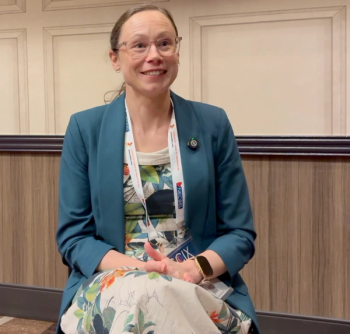
Jay Kitt of the University of Utah explains that his group’s platform for quantitative Raman measurements inside chromatographic particles didn’t come from a search for signal enhancement. It grew out of a decade of chromatography and biochemistry research.

In this interview clip, Jay Kitt, a Research Assistant Professor in the Department of Chemistry at the University of Utah, describes how his group’s approach to quantitative Raman measurements inside porous silica particles came to be viewed as an alternative to surface-enhanced spectroscopy techniques. According to Kitt, the work was never designed to pursue signal enhancement; instead, it emerged gradually from research with other aims.

The foundation was laid by a student who preceded Kitt in the group and was studying chromatographic processes inside porous silica particles. That work showed that a confocal Raman microscope could measure what happens inside the particles. It also revealed a useful property: when the C18 coverage within a particle is known, the result is an effective concentration of C18 at the interface. Because that concentration sits inside the probe volume, it can serve as an internal standard for quantification within the particles.

Kitt later built on this foundation by forming hybrid bilayer interfaces inside the particles, pairing a C18 lower leaflet with a phospholipid upper leaflet. The group used these structures to measure the lipophilicity of small molecules, and Kitt began considering how the method might extend into biochemistry. Subsequent studies examined antibodies and peptides inside the particles.

The shift in framing came roughly a decade into that biological work, when another student in the group suggested that, because the team was already using the technique as a platform, it should be presented as one. In all, the group did not publish a paper positioning the method as an alternative to surface-enhanced approaches until about 10 years after the work began.

Kitt notes the approach addresses several limitations associated with surface enhancement. It provides a quantitative response, and that response does not depend on a molecule’s distance from the interface or on its orientation relative to it. He calls these features “really neat,” while stressing that solving a specific problem with surface-enhanced methods was never the original goal.

Further Reading
  1. Kitt, J.; Workman, J., Jr.; Wetzel, W. Jay Kitt Named Spectroscopy's 2026 Emerging Leader in Molecular Spectroscopy. Spectroscopy Online, 2026. https://www.spectroscopyonline.com/view/jay-kitt-named-spectroscopy-s-2026-emerging-leader-in-molecular-spectroscopy (accessed October 14, 2026).


Related to this article

Sparks near Reno Nevada – Site of 2026 SciX Conference ©   DTM Media  -chronicles-stock.adobe.com
Wednesday's program at SciX 2026 kept returning to one question: can spectroscopy perform outside the controlled laboratory? Speakers took surface-enhanced Raman scattering (SERS), laser-induced breakdown spectroscopy (LIBS), mid-infrared photonics, chemometrics, and fluorescence excitation–emission matrix (EEM) spectroscopy into clinics, food plants, reactor coolant loops, brine fields, and drinking water supplies.
2026 SciX Conference Summary ©   Bos Amico -chronicles-stock.adobe.com
SciX 2026, the annual conference presented by the Federation of Analytical Chemistry and Spectroscopy Societies (FACSS), ran October 4–9, 2026, at the Nugget Casino Resort in Sparks, Nevada. The program spanned atomic and molecular spectroscopy, mass spectrometry, chemometrics, and bioanalysis. This report follows the meeting day by day, from Monday's clinical Raman plenaries to Friday's closing talks, drawing on the online program and Spectroscopy coverage of award winners, highlighting efforts to move Raman, SERS, LIBS, and single-particle ICP-MS toward clinical, environmental, and field use.