The inaugural Peter Griffiths Award winner discusses deep low-frequency Raman measurements through wax and what remains before clinical breast-imaging use.
The 2026 Lester W. Strock Award recipient discusses how single-particle ICP-MS can distinguish engineered and natural nanoparticles and track metalloid pollution downwind of industrial sites.
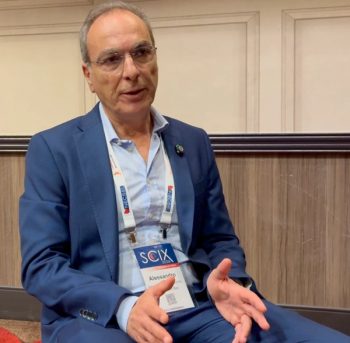
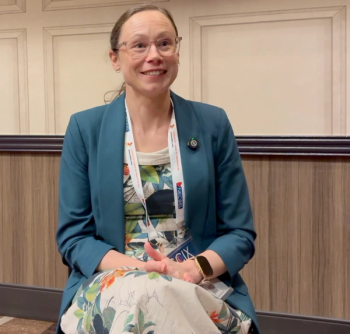
Kevin Wilkinson, a professor of environmental chemistry at the Université de Montréal, is the 2026 recipient of the Lester W. Strock Award.1 Presented by the Society for Applied Spectroscopy's (SAS) New England Section with the International Atomic Spectrometry Association, the award honors substantive research in analytical atomic spectrochemistry applied to earth, life, or cosmic sciences.1 He delivered a keynote at SciX 2026 in Sparks, Nevada.
As part of our coverage of the 2026 SciX Conference in Sparks, Nevada, Spectroscopy sat down with Wilkinson to talk about his research. In this clip, Wilkinson discusses winning the Lester W. Strock Award and what methods are most effective at distinguishing engineered nanoparticles from naturally occurring ones in real environmental samples.
Wilkinson's research examines the bioavailability, mobility, persistence, and toxicity of contaminants, particularly trace metals and engineered nanoparticles such as TiO2, ZnO, Ag, and Ce, in water, air, soil, and biota.2 His group uses single-particle inductively coupled plasma mass spectrometry (spICP-MS), fluorescence correlation spectroscopy, and hyperspectral imaging to distinguish engineered nanoparticles from naturally occurring ones in complex environmental and biological matrices.2 He has published more than 200 papers with more than 17,000 citations and received the Canadian Institute of Chemistry's Dima Environmental Research Award in 2018.2
In our conversation with Wilkinson, he also discussed the findings from his research that he presented at SciX. This study saw his group detect up to 21 elements in individual particles across hundreds of thousands analyzed. Wilkinson explained to us what the instrumentation must do to achieve that and the challenges of handling that much data.
He also explained why the absence of copper in many particles containing arsenic, antimony, bismuth, indium, and tin was telling, and what it means for understanding the region's arsenic and lead pollution. With airborne metalloids detected up to 6 km downwind and lead isotope signatures varying with particle size, Wilkinson outlined the implications for nearby communities and regulators and how the approach could transfer to other industrial sites.
Finally, he advised graduate students on the instrumentation and skills that will matter most in nanoparticle and trace-metal research over the next decade.
We are looking forward to sharing with you the rest of our conversation with Wilkinson soon. You can stay up to date on all our coverage of