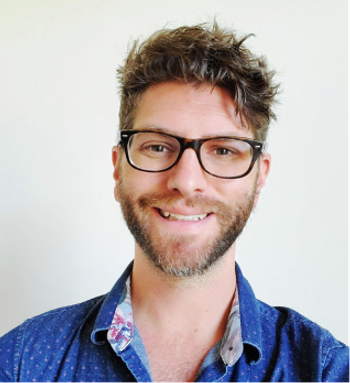
At SciX, Jay Kitt discusses a project applying Raman spectroscopy to PFAS analysis, the mentoring role he found after leaving traditional academia, and why machine learning could unlock the biochemical information in vibrational spectra.
In this “Tutorial Tuesday” clip, Peter Larkin, who is a Manager of Spectroscopy, Thermal Analysis, and Chromatography at Syensqo, highlights how people use the method or technique that they are comfortable with, even if it’s not the best one to use.
UV-vis absorption spectroscopy, one of analytical chemistry's oldest and most accessible techniques, remains foundational to cutting-edge science, underpinning the Nobel Prize-winning discovery and synthesis of quantum dots and continuing to evolve through ultralow stray-light optics, chip-scale sensors, and AI-integrated process analyzers.
In this interview segment from SciX, Juergen Popp explains why molecular “twins” built from optical measurements could reach patients within a decade, provided the field builds the regulatory, computing, and standards ecosystem around the technology.
Siddhartha Das explains how machine learning helps his group sift through roughly a trillion simulation data points. It reveals water and electroosmotic flow behavior and could speed the design of sensor-like channels.
In his SciX interview, Marc Porter discusses what happens to hydrogen when thiols bind to gold, how close analytical chemists can get to detecting a single molecule in a liter, and his new PFAS-focused startup.