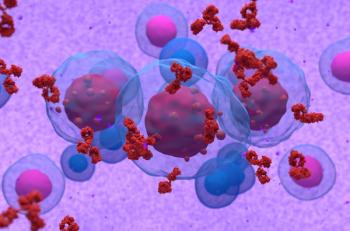
The expanded intended use takes the MALDI-TOF-based platform beyond aiding diagnosis to tracking monoclonal proteins over time in patients with multiple myeloma and Waldenström's macroglobulinemia.
In this episode of "Spectroscopy Around the Globe," host Will Wetzel discusses the role that spectroscopic techniques have played in studying Newgrange.
In Episode 5 of Spectroscopy Around the Globe, host Will Wetzel looks at how analytical chemistry has answered some of the big questions about Newgrange, which is a passage tomb in eastern Ireland built around 3200 BC. The tomb is older than Stonehenge’s great stone circle and the pyramids of Giza, and it is famous for the winter solstice sunrise that lights its inner chamber. The episode explores what scientists know about where its stones came from, when it was built, who was buried there, and what happened afterward, highlighting how spectrometers and mass spectrometers have played a critical role in this story.
Newgrange is the most recognized monument of Brú na Bóinne, which is an UNESCO World Heritage Site in Ireland’s County Meath. Its three main prehistoric sites, Newgrange, Knowth, and Dowth, are situated on the north bank of the River Boyne 50 km north of Dublin.1 Archaeologists once treated passage tombs as Bronze Age monuments, but improved radiocarbon analysis now dates them to 3200 BC, firmly placing them in the middle Neolithic.2 That makes Newgrange older than both Stonehenge and the Great Pyramid of Giza.
The scale of the structure is striking. The monument is 249 feet (76 meters) across and 39 feet (12 meters) high, covering an acre of ground.3 Its entrance leads to a 19 m passage that opens into a central chamber with three recesses set at intervals corresponding to north, west, and south.3
Newgrange is famous for its astronomical alignment. A box above the entrance channels sunlight into the tomb, and the phenomenon occurs over two or three days centered on December 21, as light travels down the passageway into the chamber and strikes the triple spiral motif.2 Local people knew the tomb filled with light at sunrise on the solstice, but on December 21, 1967, archaeologist Michael O’Kelly and his team became the first to witness the illumination since prehistoric times.2
Today, researchers see Newgrange as more than a burial site. It was a ceremonial monument, and the Brú na Bóinne monuments represent the largest and most important expression of prehistoric megalithic art in Europe.1
(1) UNESCO World Heritage Centre, Brú na Bóinne – Archaeological Ensemble of the Bend of the Boyne. UNESCO, 2026.
(2) National Museum of Ireland, The Winter Solstice at Newgrange. National Museum of Ireland, 2026.
(3) Mark, J. J. Newgrange. World History Encyclopedia, 2026.