SPEC PerkinElmer 11.10
News|Articles|September 9, 2026

The Peter Griffiths Award

Listen
0:00 / 0:00

Key Takeaways

  • The award commemorates Peter R. Griffiths’ extensive SAS leadership and decades-long editorial stewardship across *Applied Spectroscopy*, reflecting a career spanning forensics, food analysis, and industry-focused spectroscopy.
  • Financial underwriting from Shimadzu and additional supporters is positioned to sustain the award long-term within SAS’s broader awards portfolio.
SHOW MORE

The Peter Griffiths Award, named for the legendary infrared spectroscopist, recognizes the best paper published annually in Applied Spectroscopy Practica. Its inaugural recipients, Sara Fraser-Miller and coauthors, will be honored at SciX 2026, and the journal is now accepting 2026 submissions for the third award.

The Peter Griffiths Award is named in honor of legendary spectroscopist and Society for Applied Spectroscopy (SAS) member, Peter R. Griffiths. This new annual award is presented to the authors of the best paper published annually in Applied Spectroscopy Practica, the international peer-reviewed open-access journal published by SAS as a sister journal to Applied Spectroscopy. The launch of this award was made possible through the generous financial support of the Shimadzu Corporation, Peter Griffiths, and others, ensuring the award’s longevity within the suite of impactful SAS awards for many years to come. The award consists of a plaque, an honorarium, and one-year membership in SAS.

Considering Peter’s many years of dedicated service to SAS including serving as its President (1994) and his 30+ years as Applied Spectroscopy Associate Editor (1981-2009), Editor-in-Chief (2009-2012), and Editor (2012-2018), there was no one more deserving of an award named in their honor. Peter’s broad research themes from forensics to food analysis and much of that work’s emphasis on more practical and often industry-focused applications made for an easy choice and helps reinforce Practica’s emphasis on solving real-world problems through spectroscopy. For a more detailed description of Peter Griffiths’ career and achievements, refer to the February 2024 Icons of Spectroscopy feature article.1,2

All papers published in Practica in a calendar year are considered for the Peter Griffiths Award. The award selection committee consists of the journal’s Editor-in-Chief, Editors, and other select member(s). Review criteria include alignment with the journal’s aims and scope, scientific rigor, scientific novelty, and potential impact. The first recipients of the award, announced earlier this year, were Dr. Sara Fraser-Miller, Flinders University, Australia, and co-authors Mitchell C. Chalmers, Teemu Tomberg, and Keith Gordon for their paper “Discriminating Model Microcalcifications Immersed and Under Varying Depths of Wax Using Deep Low-Frequency Raman Spectroscopy”.3 The award will be presented to Dr. Fraser-Miller at SciX 2026, October 4-9 in Sparks, Nevada. The winner for papers published in 2025 is currently being reviewed and will be announced later this year.

To learn more about Applied Spectroscopy Practica, consult the journal website or the journal page on the Society for Applied Spectroscopy website. All papers submitted in 2026 will be considered for the third Peter Griffiths Award.

References

(1) Workman, J. Peter Griffiths: Icons of Spectroscopy. Spectroscopy, 2024, 39(2), 32-25. Available at https://www.spectroscopyonline.com/view/peter-griffiths-icon-of-infrared-spectroscopy (accessed September 9, 2026).

(2) Workman, J., Jr. Peter R. Griffiths (1942–2026): A Life Devoted to Infrared and Vibrational Spectroscopy. Spectroscopy, 2026, 41, August 31. https://www.spectroscopyonline.com/view/peter-r-griffiths-1942-2026-a-life-devoted-to-infrared-and-vibrational-spectroscopy (accessed September 9, 2026).

(3) Chalmers, M.C.; Tomberg, T.; Gordon, K.C.; Fraser-Miller, S.J. Discriminating Model Microcalcifications Immersed and Under Varying Depths of Wax Using Deep Low-Frequency Raman Spectroscopy. Applied Spectroscopy Practica, 2024, 2(4). https://doi.org/10.1177/27551857241302079.


Related to this article

Spectroscopy Top 10 DOI Articles of the Month (September 2026)
The following articles are the most accessed digital object identifier (DOI) manuscripts for Spectroscopy and LCGC International during the month of September 2026. Nine articles are individually ranked here by DOI page views; the third-highest entry (186 views) was recorded against the bare journal-level DOI rather than an individual article and is therefore not attributable to a single manuscript.
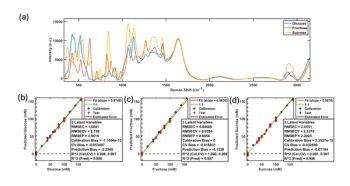
Monitoring Sugar Consumption and Ethanol Production During Yeast Fermentation Using a Raman Plate Reader and Multivariate Analysis
This column shows that a Raman plate reader paired with partial least squares regression can simultaneously quantify glucose, fructose, sucrose, and ethanol in yeast fermentation samples, using turbidity-matched calibration standards to correct for yeast-induced turbidity, and offers a rapid, label-free, high-throughput method for tracking sugar consumption and ethanol production in strain screening, media optimization, and process development.
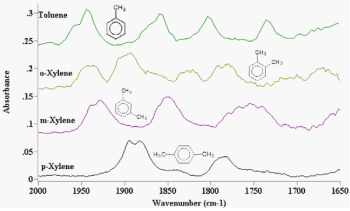
Highly Substituted Benzene Rings—The Rest of the Story II: Spectra
This column, the second installment on highly substituted benzene rings, shows that tri- and tetra-substituted substitution patterns can be distinguished by whether the ring bending peak is present and by the position of the in-phase aryl C-H wagging peak, which shifts according to how many adjacent hydrogens the ring carries.
Healthcare administrator reviewing an insurance policy schedule with a stethoscope on a clipboard, health insurance coverage, medical underwriting, prior authorization, and patient claims processing. | Image Credit: Joi_studio - stock.adobe.com
In a SciX interview, Marc Porter covered a lot of ground, from a student-driven pivot into immunoassays to a baseball analogy for Stokes and anti-Stokes scattering, and shares the open questions he is still chasing.
Spectral Frontiers: Seeing the Unseeable Microspectroscopy
Microspectroscopy, the marriage of spectroscopic chemical identification with microscopic spatial resolution, has advanced from Perkin-Elmer's first commercial infrared microspectrometer in 1953 to today's nanoscale AFM-IR probes, synchrotron-brightness infrared beamlines, and compact hyperspectral tissue imaging devices being developed for AI-assisted cancer detection.
Highlights from What’s Nu October 2026
In this Q&A, we recap the October edition of “What’s Nu,” which covered topics such as how novel spectroscopic and analytical methods are transforming environmental monitoring, medical treatment, and accessibility in scientific research.