News|Videos|March 9, 2026

Pathways in Spectroscopy: Tips for Pursuing a Career in Industry and Scientific Instrumentation

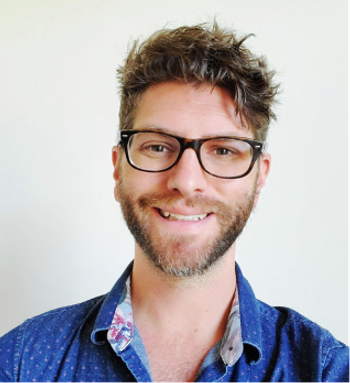
In this episode of "Pathways in Spectroscopy," John Margeson, Product Manager at Thermo Fisher Scientific, offers advice to young graduates who want to pursue careers in industry and scientific instrumentation.

“Pathways in Spectroscopy” is an ongoing vertical video series that highlights emerging leaders in spectroscopy and the various career paths spectroscopists can take.1 In the first episode, John Margeson, who is a Product Manager at Thermo Fisher Scientific in their Tewkesbury headquarters, discussed the skills and qualifications necessary in order to be a successful product manager for an instrument manufacturer.2 In the second part of our conversation with John, he offers advice to young graduates who want to pursue careers in industry and scientific instrumentation.

John Margeson: In a more general sense, I would advise them to be open to new technologies. There are countless courses you can take online, even if what you studied in school was really focused, or maybe a different focus of what you now have an interest in. You don't have to necessarily go back and get a full degree to learn whatever that new interest is. Go find some courses online that you can use to back up your skills. I would say everyone's looking at artificial intelligence (AI) these days. I constantly have to use that as a tool, but there's enough knowledge out there that we should use, but verify AI, and then just being open to new technologies, new possibilities. In my experience of product management, I’ve not only worked and handheld X-ray fluorescence (XRF). Before this, I worked with hyperspectral imaging, and this technology is something I knew nothing about until the opportunity arose, and it was a fantastic experience. So, for those graduates who are looking to get into the instrumentation, I would say, perhaps don't worry specifically about one type of application or technology. Be open to it and then see where those opportunities take you.

You can watch the first part of our conversation with John at the following link.

References

  1. Wetzel, W. Pathways in Spectroscopy, Episode 1: Sarah Theiner on Transitioning from Research to Sales. Spectroscopy. Available at: https://www.spectroscopyonline.com/view/pathways-in-spectroscopy-episode-1-sarah-theiner-on-transitioning-from-research-to-sales (accessed 2026-03-03).
  2. Wetzel, W. Pathways in Spectroscopy: How to Be A Successful Product Manager. Spectroscopy. Available at: https://www.spectroscopyonline.com/view/pathways-in-spectroscopy-how-to-be-a-successful-product-manager (accessed 2026-03-04).

Related to this article

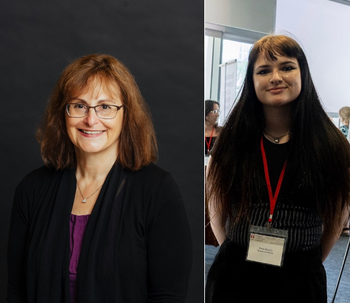
Nancy Pleshko (left) is a Laura H. Carnell Professor Emerita in Temple University's Department of Bioengineering. Petra A. Baylin (right) is a research assistant in the Tissue Imaging and Spectroscopy Lab at Temple University. Photo Credits: © Nancy Pleshko and Petra Baylin
As part of our coverage of the SciX 2026 Conference, Nancy Pleshko and Petra Baylin of Temple University sat down with Spectroscopy to talk about their recent study, explaining how Fourier transform infrared (FT-IR) imaging of ultra-high weight molecular polyethylene (UHMWPE) implants permits oxidation evaluation throughout the sample yielding insight into failure.
Work of the surgeon in the hospital operating room. Concentrated doctor with glasses. | Image Credit: © velimir - stock.adobe.com
Jürgen Popp explains how head and neck surgeons in Jena use a Raman probe to locate tumor borders, why the technique could replace frozen section biopsies, and why optical tools must adapt to clinical workflows rather than the other way around.