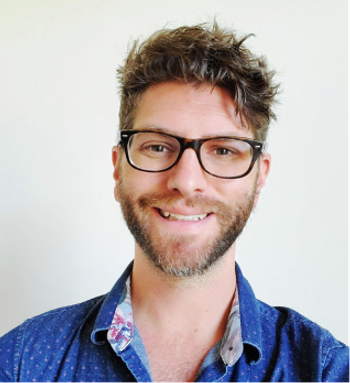
At SciX, Marc Porter explains how a Thanksgiving batting lesson led him to compare a bat meeting a ball to light scattering off a molecule, and how his group is using simulations to test whether the analogy holds.
How was the Pittcon 2026 experience in San Antonio? In this video clip, Naihao Chiang, an assistant professor of chemistry at the University of Houston, addresses this question.
Over the past five days, separation scientists, spectroscopists, industry professionals, analytical chemists, and researchers descended on the seventh-largest city in the United States to attend
In its early stages, Pittcon was relegated to five main locations: Atlanta, Chicago, Orlando, New Orleans, and Philadelphia.1 These locations served as great hubs for the scientific conference because they were large enough to accommodate the amount of attendees Pittcon would attract, and these cities also were great tourist places for attendees to experience the local culture of each city.1
However, in its recent history, Pittcon has begun to expand its footprint outside of these five main cities. From Boston to San Diego, Pittcon began to trial other cities to add some variety to its lineup. This year, Pittcon was held in Texas for the first time, hosting the show in the Henry B. Gonzalez Convention Center in downtown San Antonio.
With every new city, there’s also some inherent risk involved. Will the venue accommodate the conference’s needs? Will the attendees enjoy the technical sessions and outside activities?
Spectroscopy was curious as to what the attendees thought about this new setting for Pittcon, so I decided to ask Naihao Chiang, who is an assistant professor of chemistry at the University of Houston, for his thoughts on Pittcon 2026. In this clip, Chiang reflects on Pittcon 2026 and some of the things that come to his mind about the overall conference experience.
Chiang’s research group at the University of Houston develops plasmonic-enhanced near-field optical techniques to study light–matter interactions at the quantum limit and explore their potential in emerging technologies.2 His laboratory group uses custom-built, laser-coupled scanning probe microscopes for tip-enhanced Raman spectroscopy (TERS), which helps them explore chemical and biological processes occurring at solid–liquid interfaces.2
Future interview clips will explore Dr. Chiang’s work. We are looking forward to sharing those with you soon.
You can stay up to date with our coverage of the Pittcon 2026 conference