Register Now: Advances in Spectroscopy for Pharma and Biopharmaceutical Analysis Symposium
News|Videos|November 19, 2026

How Ion–Water Interactions Reshape Electroosmosis in Polymer-Grafted Nanochannels

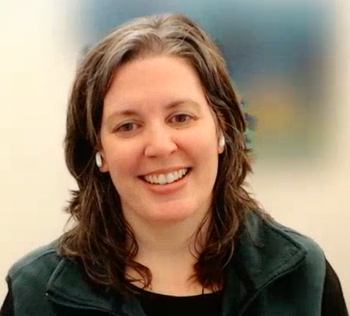
At SciX 2026, AES Mid-Career Award winner Siddhartha Das of the University of Maryland explained how all-atom simulations revealed flow reversal and “electroslippage” in brush-grafted nanochannels, and why the same ion–water physics matters for graphene desalination.

At SciX 2026, Siddhartha Das of the University of Maryland, recipient of the AES Mid-Career Award, spoke with Spectroscopy about his work on electroosmosis in nanochannels grafted with polymer brushes. Das, who began studying electrokinetics as an undergraduate roughly 25 years ago, said the award recognizes two research directions he developed at Maryland: mathematical modeling of electroosmotic transport in polymer-functionalized channels, and all-atom molecular dynamics simulations that track every atom of the polymer, water, and ions.

Electroosmosis moves water with an applied electric field even though water carries no net charge. Dissolved ions migrate under the field and drag water along. Das argues that the ion–water interactions behind this drag have received little detailed attention. His simulations show that whether ions sit inside or outside the brush layer shapes how they pull on water, so swapping the polymer changes ion distribution, water motion, and the electroosmotic flow. In polyacrylic acid brushes, overscreening produced coion-driven transport and even a reversal of flow direction at stronger fields. Das called it a career highlight but expects experimental confirmation to take several more years given the precision required in fabrication and measurement.

The same physics underpins desalination with holey graphene. Pores of about 0.5 nm admit water molecules (about 0.3 nm) but block sodium and chloride, whose hydration shells give them an effective size near 0.7 nm.

Das also described “electroslippage,” a term he coined. In the classical electroviscous effect, a streaming electric field generates energy but slows pressure-driven flow. In brush-grafted channels, the induced electroosmotic flow is carried by ions sharing the wall’s charge sign and runs with the pressure-driven flow, so energy generation and flow enhancement occur together without violating the second law.

Finally, machine learning helps his group sift the roughly one trillion data points their simulations generate, exposing hydrogen-bonding differences inside versus outside the brush and diagnosing unexpected flows.

Further Reading

(1) Das, S.; Workman, J., Jr.; Wetzel, W. Rethinking Electroosmosis Atom by Atom and Water–Ion Interactions. Spectroscopy Online, 2026. https://www.spectroscopyonline.com/view/rethinking-electroosmosis-atom-by-atom-and-water-ion-interactions (accessed November 6, 2026).


Related to this article

Abstract concept of connecting molecules DNA network vector neurons | Image Credit: © bill2499 - stock.adobe.com
Garth Simpson of Purdue University outlines plans to survey more ordered molecular assemblies and to apply interface-specific chiral spectroscopy to enzyme reactors, solid-phase synthesis, spin-selective reactions, and, ultimately, a new analytical method.
Mapping Molecular Mobility Pixel by Pixel
Garth Simpson of Purdue University explains how patterned photobleaching and spatial Fourier transforms can turn a single-point measurement into a diffusion coefficient at every pixel in the field of view.