ICP-OES Spectrometer Design: Resolution Versus Speed
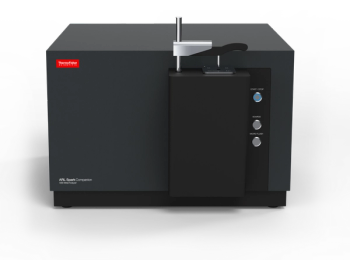
While ICP-MS has captured much of the recent instrumentation spotlight, ICP-OES remains the preferred technique for many routine applications where its lower cost, simpler operation, and adequate parts-per-billion detection limits outweigh ICP-MS’s superior sensitivity. Modern ICP-OES systems generally use one of two spectrometer configurations: scanning-based Czerny–Turner spectrometers, which offer higher spectral resolution but must sequentially scan across wavelengths, and simultaneous-based echelle spectrometers, which capture many wavelengths simultaneously using a two-dimensional detector array, trading some resolution for substantially faster multielement analysis.1 Axial plasma viewing configurations, in which the spectrometer observes the plasma along its longitudinal (central) axis rather than from the side, further improve sensitivity by effectively lengthening the optical path through the emitting plasma, though this configuration can be more susceptible to interference from samples with high total dissolved solids content than are radial viewing geometries.1
Single-Cell and Single-Particle ICP-MS
Reporting from the 20th European Winter Conference on Plasma Spectrochemistry (EWCPS), held in Berlin, Germany, in March 2025 and drawing approximately 500 attendees, Agilent Technologies noted a growing number of presentations focused on single-cell and single-particle analysis, reflecting the field’s rapid movement toward measuring individual biological and environmental particles rather than bulk-averaged elemental concentrations.6 Among Agilent’s own posters at the conference, more than 70% featured some form of hyphenated technique, with high-performance liquid chromatography (HPLC) coupling most prevalent, followed by single-particle and laser ablation applications (tied for second).6
Single-particle and single-cell ICP-MS methods now allow researchers to determine not just the average elemental concentration across a bulk sample, but the particle-by-particle or cell-by-cell distribution of that concentration, information critical for understanding nanoparticle toxicology, engineered nanomaterial fate in biological systems, and heterogeneous drug delivery efficiency at the individual-cell level. For example, the linear dynamic range of single-particle ICP-MS has recently been extended to enable the quantification of microplastics.7 Single-cell ICP-MS has also been combined with fluorescence-activated cell sorting to investigate the effects of nanotransported cisplatin(IV) prodrugs on individual cells.8 Time-of-flight ICP-MS instruments, which collect signal from every mass channel simultaneously rather than sequentially scanning as quadrupole instruments do, have become increasingly popular specifically for single-particle and laser-ablation imaging applications, where the short (sub-millisecond) transient signals produced by individual particles passing through the plasma require full-spectrum simultaneous detection to avoid missing analytically relevant mass channels.1
Recognizing the Field’s Leaders
The 2025 EWCPS conference also recognized leadership within the plasma spectrochemistry research community: Professor Martín Resano of the University of Zaragoza, Spain, received the European Award for Plasma Spectrochemistry, while Dr. Kharmen Billimoria of LGC Ltd. in the United Kingdom received the European Rising Star Award.6 Such recognitions reflect the field’s continued vitality and the steady influx of early-career researchers extending plasma spectrochemistry into new application domains, including the recovery of technically critical elements from electronic waste, which the conference report identified as an emerging research theme relevant to circular-economy challenges.6
Fluorine-Specific Detection for PFAS Analysis
Per- and polyfluoroalkyl substances (PFAS), often called “forever chemicals” for their environmental persistence, present a distinct analytical challenge: thousands of structurally diverse PFAS compounds exist, and targeted mass spectrometry methods can only quantify the relatively small subset of compounds for which reference standards exist. Fluorine-specific ICP-MS detection offers a complementary, nontargeted approach. Because fluorine is difficult to ionize directly in an argon plasma, it is commonly detected indirectly with tandem ICP-MS (ICP-MS/MS) as a polyatomic ion such as BaF⁺, giving a response that is element-specific rather than structure-specific. Heuckeroth and colleagues coupled HPLC-ICP-MS/MS in parallel with high-resolution electrospray ionization mass spectrometry, reducing more than 5000 electrospray features to 15 fluorine-containing candidates and helping identify organofluorine biodegradation products formed in sewage sludge that targeted liquid chromatography–tandem mass spectrometry (LC–MS/MS) methods could miss because no analytical standards exist for them.9 A related post-ICP chemical ionization mass spectrometry approach has been developed to quantify total extractable organic fluorine.10
Summary and Conclusions
ICP-MS and ICP-OES continue to demonstrate that a mature analytical platform, first developed for bulk elemental analysis decades ago, can be repeatedly re-engineered to address entirely new measurement scales and analytical questions. Interference-suppression innovations such as Thermo Fisher Scientific’s patented collision-cell approach aim to push trace-level detection limits lower without sacrificing analyte sensitivity, while single-cell and single-particle methodologies, increasingly prominent at conferences such as EWCPS, are extending elemental analysis down to the level of individual biological and environmental particles.
Meanwhile, fluorine-specific ICP-MS detection illustrates how these techniques continue to find new relevance in addressing emergent environmental and regulatory challenges, such as characterizing the full scope of PFAS contamination, that targeted molecular mass spectrometry methods alone cannot fully address.
Whether the goal is resolving a single nanoparticle passing through the plasma in less than a millisecond or screening drinking water for thousands of uncharacterized PFAS transformation products, the underlying engineering trend is consistent: ICP-based elemental analysis keeps gaining resolution, whether spatial, temporal, or chemical, without abandoning the fundamental plasma-based atomization and ionization chemistry that has defined the technique for more than half a century.
Future Outlook
Expect continued growth in hyphenated and multiplexed ICP-MS techniques, particularly HPLC-ICP-MS and laser ablation ICP-MS imaging, as researchers increasingly demand elemental speciation and spatial context alongside simple concentration measurements. Time-of-flight ICP-MS adoption should continue expanding for single-particle and single-cell applications, where its simultaneous full-spectrum detection capability offers a genuine advantage over sequential quadrupole scanning for transient, sub-millisecond particle signals.
As regulatory scrutiny of PFAS and other persistent environmental contaminants intensifies, fluorine-specific and other nontargeted ICP-MS detection strategies are likely to see expanded adoption alongside targeted chromatography–mass spectrometry methods, providing a more complete picture of total contaminant burden than targeted analysis alone can offer. Continued interference-suppression innovation, building on approaches such as the combined gas-counterflow and ion-trapping method patented by Thermo Fisher Scientific, should further lower achievable detection limits for historically interference-prone elements, extending ICP-MS’s trace analysis capabilities into increasingly complex sample matrices.
Growing recognition of early-career talent through awards such as the European Rising Star Award presented at EWCPS also signals a healthy pipeline of researchers positioned to carry these instrumentation and application advances forward over the coming decade.
References
(1) Quarles, C. D., Jr.; Manard, B. T. Inductively Coupled Plasma-Based Techniques (ICP-OES and ICP-MS). Spectroscopy Online, October 29, 2020. https://www.spectroscopyonline.com/view/inductively-coupled-plasma-based-techniques-icp-oes-and-icp-ms- (accessed 2026-11-20).
(2) Greenfield, S.; Jones, I. L.; Berry, C. High-Pressure Plasmas as Spectroscopic Emission Sources. Analyst 1964, 89 (1064), 713–720. DOI: 10.1039/an9648900713
(3) Wendt, R. H.; Fassel, V. A. Induction-Coupled Plasma Spectrometric Excitation Source. Anal. Chem. 1965, 37 (7), 920–922. DOI: 10.1021/ac60226a003
(4) Houk, R. S.; Fassel, V. A.; Flesch, G. D.; et al. Inductively Coupled Argon Plasma as an Ion Source for Mass Spectrometric Determination of Trace Elements. Anal. Chem. 1980, 52 (14), 2283–2289. DOI: 10.1021/ac50064a012
(5) Belov, M.; Rottmann, L. Interference Suppression in Mass Spectrometer. US 12 148 605 B2, 2024. https://patents.google.com/patent/US12148605B2/en (accessed 2026-11-20).
(6) Sannac, S.; Desprez, A.; Wahlen, R. Reflections on 2025 European Winter Conference on Plasma Spectrochemistry. The ICP-MS Journal; Agilent Technologies, 2025. https://www.agilent.com/en/product/atomic-spectroscopy/inductively-coupled-plasma-mass-spectrometry-icp-ms/winter-plasma-conference-report-2025 (accessed 2026-11-20).
(7) Caceres, G. C.; Johnson, M. E.; Molloy, J. L.; Lee, S. B.; Montoro Bustos, A. R. Extending the Linear Dynamic Range of Single Particle ICP-MS for the Quantification of Microplastics. Anal. Chem. 2025, 97 (36), 19818–19828. DOI: 10.1021/acs.analchem.5c03552
(8) Gutierrez-Romero, L.; Blanco-González, E.; Montes-Bayón, M. Single-Cell ICP-MS in Combination with Fluorescence-Activated Cell Sorting for Investigating the Effects of Nanotransported Cisplatin(IV) Prodrugs. Anal. Chem. 2023, 95 (32), 11874–11878. DOI: 10.1021/acs.analchem.3c02506
(9) Heuckeroth, S.; Nxumalo, T. N.; Raab, A.; Feldmann, J. Fluorine-Specific Detection Using ICP-MS Helps to Identify PFAS Degradation Products in Nontargeted Analysis. Anal. Chem. 2021, 93 (16), 6335–6341. DOI: 10.1021/acs.analchem.1c00031
(10) White, S.; Jorabchi, K. Post-ICP Chemical Ionization MS for Total Extractable Organic Fluorine Quantitation. ACS Omega 2024, 9 (46), 46634–46642. DOI: 10.1021/acsomega.4c09483