A candid plenary on the incentives shaping academic science was followed by an afternoon of talks spanning flowing SERS detection, historical textiles, maple syrup, pathogen immunoassays, and electrochemical Raman microscopy.
What were attendees talking about the most at Spring SciX?
Spring SciX 2026, held April 14–16 at the University of Exeter, brought together researchers, industry professionals, and students from across the analytical chemistry and spectroscopy community for three days of scientific exchange and collaboration. The biennial conference featured sessions spanning Raman, infrared (IR), and molecular spectroscopy, mass spectrometry, biomedical imaging, and process analytical chemistry, reflecting the breadth of current research in the field.1-3 A newly introduced session on artificial intelligence in analytical chemistry underscored the growing influence of machine learning and data-driven methods in spectroscopy and analysis.1-3 The program also included plenary lectures from leading scientists such as Thomas Bocklitz, Sarah Bohndiek, and Bernard Lendl, as well as presentations from early career researchers and exhibitors showcasing the latest technologies and instrumentation.
There were several recurring topics of discussion that took place at Spring SciX. The first of these topics was the growing use of Raman spectroscopy in biological and clinical settings. Numerous talks that took place on the topic, and one of the key points of emphasis was on how Raman spectroscopy and surface-enhanced Raman spectroscopy (SERS) can pass regulatory muster to be integrated more fully in clinical diagnostics.
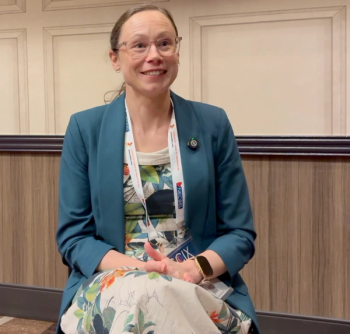
“One of the key topics that I took from Spring SciX was really about the challenge of translating Raman and SERS into point-of-care settings,” Sian Sloan-Dennison, a postdoctoral research associate at the University of Strathclyde, said to Spectroscopy. “We discussed some of the major barriers, such as like your devices have to reach like strict medical conditions, kind of set by governing bodies like the MHRA, and how that we to try and meet these criteria in order to push these devices forward.”
But pushing these devices forward requires that they remain user-friendly. Sloan-Dennison said that the main objective of building these devices is to make them so non-spectroscopists can easily use them.
“That kind of goes on to how we can all make these fantastic devices and show their clinical applications, but we have to make sure that they're getting into the right hands in the doctors and nurses who want to use these devices can use them,” Sloan-Dennison said.
On the biologics side of the equation, Thomas Bocklitz, a Professor for Photonic Data Science at Friedrich Schiller University Jena, thought that the talks delivered at Spring SciX highlighted the innovations researchers made to their spectroscopic methods.
“A particular highlight was the advancements in spectroscopy, which have made it possible to analyze biological samples in real time,” Bocklitz said.
Meanwhile, another topic that was discussed extensively was artificial intelligence (AI). For the first time this year, Spring SciX dedicated a portion of its programming to feature talks on this topic, and the insights the researchers shared provided a sense at where the industry is at in regard to its comfort in integrating AI into normal workflows.
“Key topics included the use of AI to analyze data and the integration of multi-sensor platforms to comprehensively characterize complex samples,” Bocklitz said. “There was a general consensus on the need for standardized data formats and metadata. However, debates arose regarding the most effective ways to integrate AI into data analysis, particularly with regard to striking the right balance between robustness, transparency and efficiency.”
Jennifer Ferguson, an Applications Manager at Renishaw, observed that among the analytical techniques discussed at Spring SciX, the main technique that was seeing significant progress in integrating AI was Raman spectroscopy.
“We were seeing a lot of talks on AI and deep learning within the Raman community, and how that's being applied to Raman analysis,” Ferguson said.
Despite the ongoing challenges that researchers are facing in this new age of AI and how its disrupting clinical, biological, and analytical workflows, attendees remain optimistic about the state of the field, given the progress researchers are making in their work.
“In terms of what people were talking about, there was a lot of Raman imaging talks, and we were lots of discussions on kind of like how the technique is really progressing to kind of create these like really in-depth images to look at drug profiling, and how lots of different groups are building these interesting Raman probes to tell you more about what's happening inside cells or on tissues, and how we're pushing that technique into clinical applications,” Sloan-Dennison said.
Ferguson in particular highlighted that the Spring SciX conference allows others to witness the rise and career progression of several recurring young researchers who are nearing the end of their educational careers and preparing to begin a full-time laboratory career.
“You really get to meet a lot of people [at Spring SciX], and then you get them to see them kind of progress through their careers as well,” Ferguson said. “So there was a lot of Ph.D. students that had only just started, whenever I kind of was going to these, and now they're kind of coming towards the end, and you really get to see the development of that research and find out a lot about what they've learned and how that research is impacting the wider Raman spectroscopy community.”
Because of the opportunity to meet a lot of attendees under one roof, researchers remarked that it gives them the chance to network, which form the foundation for potential collaborations down the line.
“SciX and Spring SciX are excellent at fostering interdisciplinary exchange. Attending the conference has motivated me to seek more intensive collaborations with interdisciplinary teams, particularly those specializing in multimodal analytical methods,” Bocklitz said.