SPEC PerkinElmer 10.13
News|Videos|May 18, 2026

What were the Main Takeaways of the Spring SciX Conference?

Sian Sloan-Dennison, a postdoctoral research associate at the University of Strathclyde, highlights the key topics that were discussed at Spring SciX.

Spring SciX is a biennial conference that is organized by the Federation of Analytical Chemistry and Spectroscopy Societies (FACSS). This conference serves as a gathering place where researchers can discuss advancements in spectroscopy, mass spectrometry (MS), and emerging sensing technologies.1,2

In the below video clip, Sian Sloan-Dennison, who is a postdoctoral research associate at the University of Strathclyde, discusses some of the important topics or themes that attendees were primarily speaking about at the show.

Sloan-Dennison reflects on their key takeaways from Spring SciX, focusing primarily on the challenges of translating Raman and surface-enhanced Raman spectroscopy (SERS) technologies into point-of-care medical settings.

A central theme was the regulatory and practical barriers that must be overcome before these devices can be used clinically. Developers must meet strict medical standards set by governing bodies and ensuring compliance is a significant hurdle in advancing these technologies toward real-world application.

Beyond regulation, Sloan-Dennison talked about the critical importance of usability. Even the most sophisticated and clinically promising devices are of limited value if healthcare professionals, doctors and nurses, cannot operate them with ease. She emphasized that end users should not need specialist training in spectroscopy to use these tools effectively, prompting a broader conversation about how researchers can step back from their technical expertise and consider the practical needs of those on the front line of patient care.

Another key point raised was the need for more healthcare professionals to emerge as advocates for the adoption of Raman or SERS-based assays within clinical environments. Such advocates are seen as essential to bridging the gap between laboratory innovation and real-world medical use.

Finally, Sloan-Dennison noted a strong presence of Raman imaging discussions at the conference, with many research groups showcasing advances in drug profiling and the development of novel Raman probes. These tools are enabling deeper insights into cellular and tissue activity, further pushing the technique toward meaningful clinical applications.

References
  1. Wetzel, W.; Spectroscopy Staff. Previewing Spring SciX 2026. Spectroscopy. Available at: https://www.spectroscopyonline.com/view/previewing-spring-scix-2026 (accessed 2026-05-06).
  2. Bocklitz, T.; Wetzel, W. The Key Takeaways from Spring SciX 2026. Spectroscopy. Available at: https://www.spectroscopyonline.com/view/the-key-takeaways-from-spring-scix-2026 (accessed 2026-05-06).


Related to this article

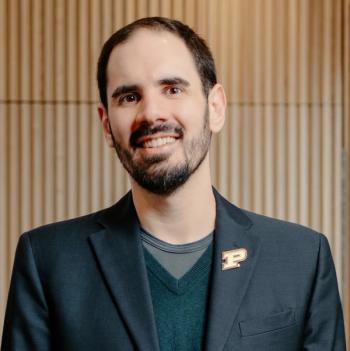
Brandon E. Boor is the Dr. Margery E. Hoffman Associate Professor in the Lyles School of Civil and Construction Engineering at Purdue University. | Photo Credit: © Brandon Boor.
In the second part of our interview with Brandon Boor of Purdue University, he discusses how his team controls experimental variables during cleaning experiments in order to obtain interpretable data.
Sizing Up the Nanoscale: Measuring Nanocluster Aerosol in Indoor Air
In the first part of a multi-part Q&A, Brandon Boor, the Dr. Margery E. Hoffman Associate Professor in the Lyles School of Civil and Construction Engineering at Purdue University, describes the instrumentation and methodology behind measuring nanoparticle size distributions at the nanocluster scale (1–3 nm) and outlines the technical challenges of acquiring reliable, real-time data at these dimensions.
FACSS 2026 Award Interviews ©  Erin -chronicles-stock.adobe.com
Eight FACSS award winners at SciX 2026, One LIBS trailblazer. Forty-eight questions. And not one of them is a softball. Award season in spectroscopy usually means polite applause, a plaque, and a photo. We're not completely interested only in the award sessions. The eight scientists honored at SciX 2026 in Sparks, Nevada, along with LIBS researcher Alessandro De Giacomo, are pushing Raman into operating rooms, flying LIBS on drones, reading chemistry off Mars, and tracing toxic metals downwind of industrial sites. Their work makes big claims. In the coming days, Spectroscopy will sit down with eight of these researchers and ask whether those claims hold up. The interviews that follow won't just celebrate. They'll press on the gaps between simulation and experiment, between the lab bench and the clinic, and between a clever paper and an instrument someone will actually buy and use.
The Ongoing Decline of Spectroscopy Expertise
In this panel discussion, five SpecAcademy instructors examined why spectroscopy expertise has declined and how SpecAcademy aims to rebuild it through curated, fundamentals-based education suited to increasingly complex analytical work.