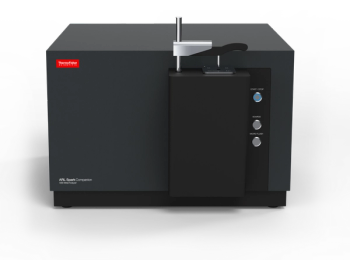
According to Thermo Fisher, the ARL Spark Companion pairs a multi-optics complementary metal-oxide-semiconductor (CMOS) detector with a compact spark source, aiming to move alloy verification out of external laboratories and closer to production.
Croatian researchers outline how optical emission spectroscopy (OES) can track reactive species and plasma parameters in real time, giving processors a path to move cold plasma treatments from the laboratory to production lines.
A recent review article published in Applied Sciences by researchers at the Ruđer Bošković Institute and the University of Zagreb highlighted how optical emission spectroscopy (OES) has accompanied the development of plasma-based food processes. 1 Because of this trend, OES has helped serve as non-invasive sensor that monitors plasma behavior in real time and supports the transition of cold plasma treatments from laboratory to industrial scale.1
The review article explored how
Currently,
Monitoring any plasma process requires sensors. In their review article, the authors discuss two main types of sensors. The first type is invasive sensors. These include electrostatic, Langmuir, and double floating probes, all of which are placed inside the plasma system.1 They provide density, temperature, and flux data during early development, but they also perturb the plasma they are measuring.1
Meanwhile, the second type is non-invasive. These include including OES, ellipsometry, and laser-induced fluorescence (LIF), and there are noninvasive because they make no direct contact with the plasma.1 Therefore, they do not alter the dynamics, which the authors say makes them well suited to industrial use.1 The trade-off is that indirectly collected data require additional analysis to extract the parameters that matter for a given application.1
OES measures the light emitted after a sample is excited. Electrons promoted to higher energy levels release photons as they return to lower levels, and each element emits at well-defined wavelengths.1 By recording radiation intensity at those wavelengths, OES identifies elements, including those present at low concentrations, and allows key plasma parameters such as temperature and particle number density to be calculated from the emission lines.1 OES can be applied to solids, liquids, and gases and is non-destructive to the sample.1
The review article builds on earlier work by Pleslić, published in the same journal in 2025.2 In that study, OES was used to monitor non-thermal plasma generated by high-voltage electrical discharge and was recommended for routine control of food processing to confirm that treatments remain non-thermal.2 The new review article covers several OES configurations, including inductively coupled plasma OES (ICP-OES), microwave-induced plasma OES (MIP-OES), dielectric barrier discharge OES (DBD-OES), and plasma jet OES (PJ-OES).
Beyond process monitoring, the authors described OES in their article as a quality control tool for verifying the mineral content of food products, including heavy metals.1 They noted that the technique simplifies determination of the origin and authenticity of products such as olive oil and wine, and that contaminant detection in food and beverages supports compliance with global safety standards and helps prevent or minimize health risks.1
The authors concluded that all research on new food products, particularly functional foods, and on process improvements using plasma technology should be accompanied by OES.1