|Webcasts|October 19, 2021

Single Particle ICP-MS Applications in Advanced Semiconductor Processes

Tuesday, October 19, 2021 at 2pm EDT| 1pm CDT | 11am PDT This presentation will cover two recently developed applications in two critical semiconductor processes: ultrafiltration and chemical mechanical planarization (CMP). Single-particle ICP-MS has demonstrated its ability to measure, for the first time, some important attributes of these processes.

Register Free: http://www.spectroscopyonline.com/spec_w/semi

Event Overview:

Single-particle ICP-MS (spICP-MS) has the capability to size and count particles as small as sub-10 nm at ultratrace levels. It has been widely accepted as a powerful tool in many fields of study, for example single-cell analysis by mass cytometry or CyTOF, environmental analysis, and industrial nanotoxicology. Its superb sensitivity and selectivity often distinguish it from other particle analysis techniques for many applications.

This presentation will cover two recently developed applications in two critical semiconductor processes: ultrafiltration and chemical mechanical planarization (CMP). Single-particle ICP-MS demonstrated its ability to advance the metrology to measure, for the first time, some important attributes of these processes. For example, spICP-MS was used to successfully measure size-exclusion retention of nanoparticles by ultrafiltration membranes, and to quantify the size changes of ceria nanoparticles before and after CMP processes. The fundamentals and applications of spICP-MS will be discussed in more detail in the presentation.

Key Learning Objectives:

  • Learn how 3M uses spICP-MS for semiconductor applications
  • Learn about fundamentals and applications of spICPMS
  • Learn about two recently developed applications in two critical semiconductor processes: ultrafiltration and chemical mechanical planarization (CMP)

Who Should Attend:

  • Metals analysis lab managers, chemists, and technicians involved in trace metals testing
  • Lab managers and lab technicians looking to optimize single particle methods using ICP-MS
  • Lab directors and commercial lab managers looking to better understand how spICPMS can benefit their labs

Register free: http://www.spectroscopyonline.com/spec_w/semi


Related to this article

Celebrating National Forensic Science Week
This interactive e-book celebrates National Forensic Science Week by highlighting the vital role of spectroscopy in modern criminal investigations and emphasizing how technological innovation is making forensic analysis faster, safer, and more reliable for courtroom testimony.
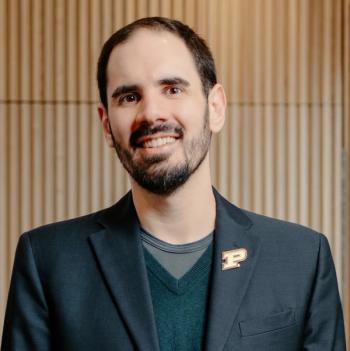
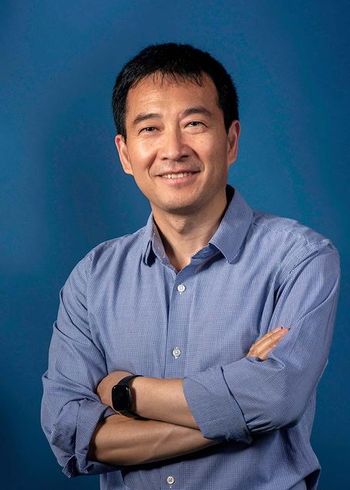
Brandon E. Boor is the Dr. Margery E. Hoffman Associate Professor in the Lyles School of Civil and Construction Engineering at Purdue University. | Photo Credit: © Brandon Boor.
In the second part of our interview with Brandon Boor of Purdue University, he discusses how his team controls experimental variables during cleaning experiments in order to obtain interpretable data.
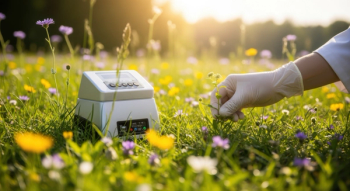
Scientist With Portable Spectrometer in Natural Field Setting ©  By Tika -chronicles-stock.adobe.com
The bulky bench-top NIR spectrometer is quietly being dismantled and rebuilt as a wafer-scale photonic chip, a self-calibrating algorithm, and a sensor small enough to ride in a shirt pocket. What once demanded a grating, a moving mirror, and a climate-controlled lab now fits inside a handheld module, a bioreactor probe, or a drone payload, and it increasingly figures out what it is looking at on its own.