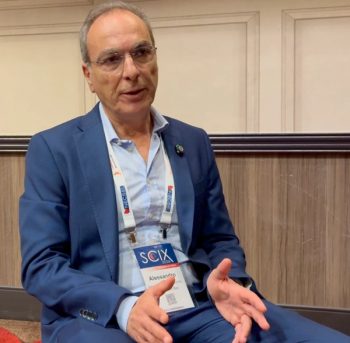
Jose Caceres, a professor at Complutense University in Madrid, Spain, concurred with this view, also mentioning that LIBS avoids using reagents.
“[LIBS] allows the complete elemental profile of a sample to be obtained in seconds, requires minimal preparation, and avoids using reagents, reducing costs and analysis time,” Caceres said to Spectroscopy (3).
In the early 2010s, elemental analysis was routinely done with techniques such as micro-X-ray fluorescence (μXRF) and laser ablation–inductively coupled plasma–mass spectrometry (LA-ICP-MS) (2). LIBS offered a new way to conduct forensic analysis, but its results compared to LA-ICP-MS were comparable. Ultimately, the application dictated how well the technique performed compared to the other.For example, LA-ICP-MS had slightly better discrimination when analyzing ink composition, but LIBS performed slightly better for soil analysis (2).
The big difference, though, is in cost.
“It would take about $500,000 to equip a laboratory to do LA-ICP-MS, because you need not only the instrumentation, but also a special room and very experienced users,” Almirall said (2). “Very few forensic labs can afford that. Commercial LIBS systems costing around $90,000–100,000 are currently available, making LIBS much more affordable for the typical forensic laboratory.”
How has LIBS evolved over the years?
The LIBS data generated is often very complex. This challenge used to be one of the major drawbacks to using the technique. However, advancements in artificial intelligence (AI) have changed this for the better. Using AI has helped automate data processing and enable real-time material characterization (4,5).
Machine learning (ML) models have also played a role in advancing LIBS in forensic analysis. Support vector machines (SVM), neural networks, and decision trees have been used to analyze LIBS spectral data (5). Once these ML models are trained, they become equipped to decipher the elemental compositions of unknown samples with great accuracy, which has only accelerated the use of data analysis in forensics (5).
Moving forward, LIBS will be regularly used to analyze bones, but now advancements in AI and data-based technologies have opened the doorway for more efficient analysis.
“LIBS, combined with AI-based classification algorithms, has broad potential in forensic science and bioarchaeology,” Caceres said (3). “In my opinion, the most promising capabilities and applications include the following: individual reassembly in mixed remains contexts; preliminary and in situ identification in forensic settings; analysis of archaeological remains and fossils; and studies on diet, health, and bone biogeochemistry.”
References
- Applied Spectra, What is LIBS? Applied Spectra. Available at: https://appliedspectra.com/technology/libs.html (accessed 2025-12-02).
- Bush, L. LIBS in Forensic. Spectroscopy 2011, 26 (4). Available at: https://www.spectroscopyonline.com/view/libs-forensics
- Wetzel, W. Analyzing Bone Chemistry with LIBS. Spectroscopy. Available at: https://www.spectroscopyonline.com/view/analyzing-bone-chemistry-with-libs (accessed 2025-12-02).
- Iwakin, O.; Liu, J.; et al. Artificial Intelligence Techniques in LIBS Data Analysis and Interpretation. In Laser Induced Breakdown Spectroscopy (LIBS); Singh, V., Ed.; Springer: London, 2025; pp 239–253. Available at: https://link.springer.com/chapter/10.1007/978-3-031-90970-2_11#:~:text=The%20previous%20section%20highlighted%20the,inferences%20using%20selected%20AI%20methods.
- Eureka, Real-Time LIBS: Integrating AI for Spectral Pattern Recognition. Eureka by Patsnap. Available at: https://eureka.patsnap.com/article/real-time-libs-integrating-ai-for-spectral-pattern-recognition (accessed 2025-12-02).