SPEC PerkinElmer 10.13
News|Videos|May 20, 2026

The Benefit of Integrating a SERS Assay with a Digital Microfluidics Platform

Why does integrating a surface-enhanced Raman scattering (SERS) assay with a digital microfluidics (DMF) platform improve sensitivity, reproducibility, and throughput when detecting onset of drug-induced liver injury?

Recently, the Spring SciX conference took place at the University of Exeter. From April 16–18, attendees gathered to discuss the latest trends and advancements in spectroscopy, mass spectrometry (MS), and emerging sensing technologies.1,2

Sian Sloan-Dennison, who is a postdoctoral research associate at the University of Strathclyde, attended Spring SciX this year. As part of our coverage of the Spring SciX conference, she sat down with Spectroscopy to talk about what was discussed at the conference and what her talk focused on. In the below video segment, Sloan-Dennison discusses how integrating a surface-enhanced Raman scattering (SERS) assay with a digital microfluidics (DMF) platform improves sensitivity, reproducibility, and throughput compared to traditional bulk-solution approaches.


At Spring SciX, Sloan-Dennison’s talk presented a new diagnostic platform designed to improve the rapid detection of drug-induced liver injury (DILI), a major clinical challenge caused by prescription and over-the-counter medications. In the UK, paracetamol overdose is the leading cause of DILI, accounting for roughly 100,000 hospital visits annually, highlighting the need for faster and more accurate diagnostic tools.3 Current methods are limited by slow turnaround times and reliance on biomarkers that are not liver-specific and rise only after significant injury has occurred.3

To address these shortcomings, Sloan-Dennison’s team targeted microRNA-122, a liver-specific biomarker, using a SERS-based magnetic hybridization assay.3 Although the assay has traditionally been performed in bulk solution, researchers transferred it to a DMF platform to improve sensitivity, reproducibility, throughput, and reduce sample volume requirements. DMF technology manipulates tiny droplets on a chip through electrowetting, enabling automated dispensing, mixing, incubation, and analysis.3

By integrating the DMF platform with a portable Raman spectrometer, the researchers achieved approximately 100-fold greater sensitivity compared to the conventional solution-based assay.3 Preliminary testing with human samples also showed promising results. The team envisions this DMF-SERS platform as a rapid, portable point-of-care tool for earlier DILI detection and improved patient management.

References
  1. Wetzel, W.; Spectroscopy Staff. Previewing Spring SciX 2026. Spectroscopy. Available at: https://www.spectroscopyonline.com/view/previewing-spring-scix-2026 (accessed 2026-05-06).
  2. Bocklitz, T.; Wetzel, W. The Key Takeaways from Spring SciX 2026. Spectroscopy. Available at: https://www.spectroscopyonline.com/view/the-key-takeaways-from-spring-scix-2026 (accessed 2026-05-06).
  3. Sloan-Dennison, S. Droplets to Diagnosis: Digital Microfluidic SERS Detection of microRNA-122. Presented at Spring SciX, Exeter, United Kingdom, 2026. Available at: https://rapide-diagnostics.co.uk/wp-content/uploads/2026/04/Spring-SciX-Programme.pdf

Related to this article

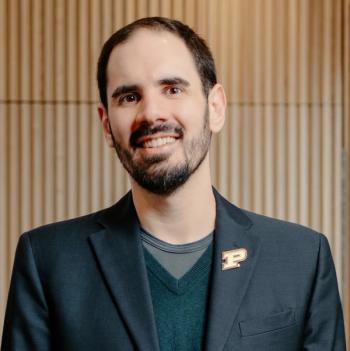
Brandon E. Boor is the Dr. Margery E. Hoffman Associate Professor in the Lyles School of Civil and Construction Engineering at Purdue University. | Photo Credit: © Brandon Boor.
In the second part of our interview with Brandon Boor of Purdue University, he discusses how his team controls experimental variables during cleaning experiments in order to obtain interpretable data.
Sizing Up the Nanoscale: Measuring Nanocluster Aerosol in Indoor Air
In the first part of a multi-part Q&A, Brandon Boor, the Dr. Margery E. Hoffman Associate Professor in the Lyles School of Civil and Construction Engineering at Purdue University, describes the instrumentation and methodology behind measuring nanoparticle size distributions at the nanocluster scale (1–3 nm) and outlines the technical challenges of acquiring reliable, real-time data at these dimensions.
FACSS 2026 Award Interviews ©  Erin -chronicles-stock.adobe.com
Eight FACSS award winners at SciX 2026, One LIBS trailblazer. Forty-eight questions. And not one of them is a softball. Award season in spectroscopy usually means polite applause, a plaque, and a photo. We're not completely interested only in the award sessions. The eight scientists honored at SciX 2026 in Sparks, Nevada, along with LIBS researcher Alessandro De Giacomo, are pushing Raman into operating rooms, flying LIBS on drones, reading chemistry off Mars, and tracing toxic metals downwind of industrial sites. Their work makes big claims. In the coming days, Spectroscopy will sit down with eight of these researchers and ask whether those claims hold up. The interviews that follow won't just celebrate. They'll press on the gaps between simulation and experiment, between the lab bench and the clinic, and between a clever paper and an instrument someone will actually buy and use.