The 2026 AES Mid-Career Award recipient explains how molecular-scale simulations of polyelectrolyte brush-grafted nanochannels are revealing unexpected flow behavior.
How does a college professor pull from their experience in government and the private sector to educate students pursuing careers in spectroscopy?
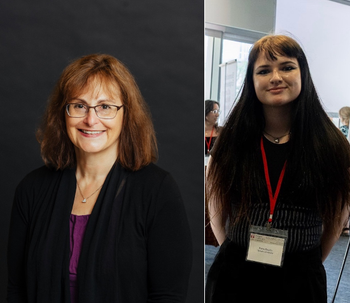
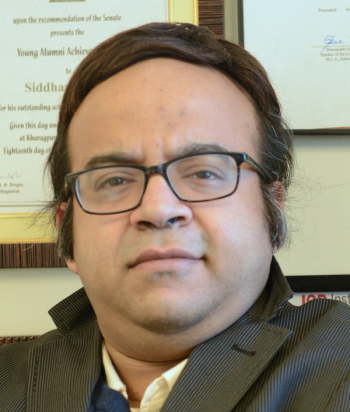
Mary Kate Donais is a Professor at St. Anselm College, but before joining academia, she served in the private sector and for the government. Her research has focused on using analytical instrumentation to study a wide range of materials, with recent efforts centered on archaeological and cultural heritage objects.1 Since 2008, she has employed portable X-ray fluorescence (XRF), laser-induced breakdown spectroscopy (LIBS), and Raman spectroscopy to analyze artifacts and building materials from archaeological sites, including ceramics, coins, pigments, mortars, lead pipes, and frescoes.1 Her work helps reveal the elemental and molecular composition of historical materials, providing insights into their origin, manufacture, and preservation.1
In this “
Spectroscopy: Your career has spanned from working as an analytical chemist in government, to roles in industry, and finally to academia. How have your previous jobs influenced how you approach your job in educating students on spectroscopy?
Mary Kate Donais: The foundations that I had from previous positions in government and industry have led me to a more practical and hands-on approach to my teaching, especially in the laboratory. Interestingly, in my early training at the National Institute of Standards and Technology (NIST), I was doing measurements to standardize reference materials, so that is the absolute pinnacle of accuracy, precision, and careful data analysis. I'm now somewhat on the other side of that spectrum in that a lot of what I do is qualitative, and I'm using portable spectroscopy to instead answer what could be rather simple questions. So while it has an influence on how I approach things, I also had to reteach myself that not everything requires that that level of accuracy and precision, and it has brought me to the point of that practical approach of recommending to the students to consider the situation at hand, whether this is a discussion of something in class or whether it's an experiment that we're doing in the laboratory or whether it's their research, and approach it with the practical stance of what is necessary to answer the question.
This is the second part of our conversation with Donais. She and her team published an
(1) Saint Anselm College, Mary Kate Donais. Anselm.edu. Available at:
(2) Jackson, M.; Perrelli, D.; Shelley, J. T.; Donais, M. K. An Archaeometric Investigation into the Former Cataract House Hotel via Elemental Analysis. Spectrosc. Suppl. 2022, 37 (s11), 12–16. DOI: