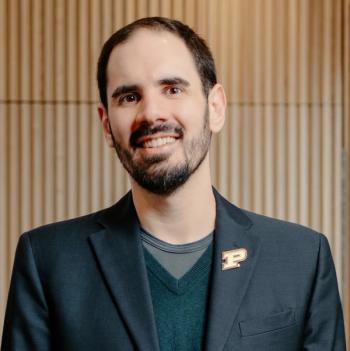
The Winter Conference on Plasma Spectrochemistry took place last week in Tucson, Arizona, where attendees had the opportunity to present their research and connect with their colleagues. One of those attendees was Anika Retzmann, a postdoctoral researcher in the Atom Mass Lab at the University of Calgary. She delivered a talk titled “Introducing MC-MICAP-MS: Metal Isotope Abundance Ratio Measurements Using a N2-based Plasma Ion Source” (1).
Retzmann is an analytical chemist and isotope science researcher specializing in elemental and stable metal isotopic analyses for environmental, archaeological, biomedical, and life-science applications (2). Her work advances high-precision analytical methods to clarify the roles and signatures of essential elements in complex systems. She employs multi-collector inductively coupled plasma mass spectroscopy (MC-ICP-MS), thermal ionization mass spectrometry (TIMS), and automated analyte purification, and has led the development of fully automated chromatographic procedures that greatly increase throughput for isotopic measurements of elements such as lead, zinc, and calcium (2). Retzmann earned her PhD in Analytical Chemistry at the University of Natural Resources and Life Sciences in Vienna, and has held international research roles in Austria, Germany, and Canada, contributing innovations in plasma ion sources and method development (2).
Spectroscopy sat down with Retzmann at the Winter Conference on Plasma Spectrochemistry to talk about her research. In Part I, Retzmann discussed how analyzing elemental and stable metal isotopic compositions of biological systems help answer fundamentally different research questions across fields such as biomedicine and environmental science (3). In Part II, she explains how developing fully automated analyte purification procedures helps improve data quality and reproducibility compared to traditional approaches.